
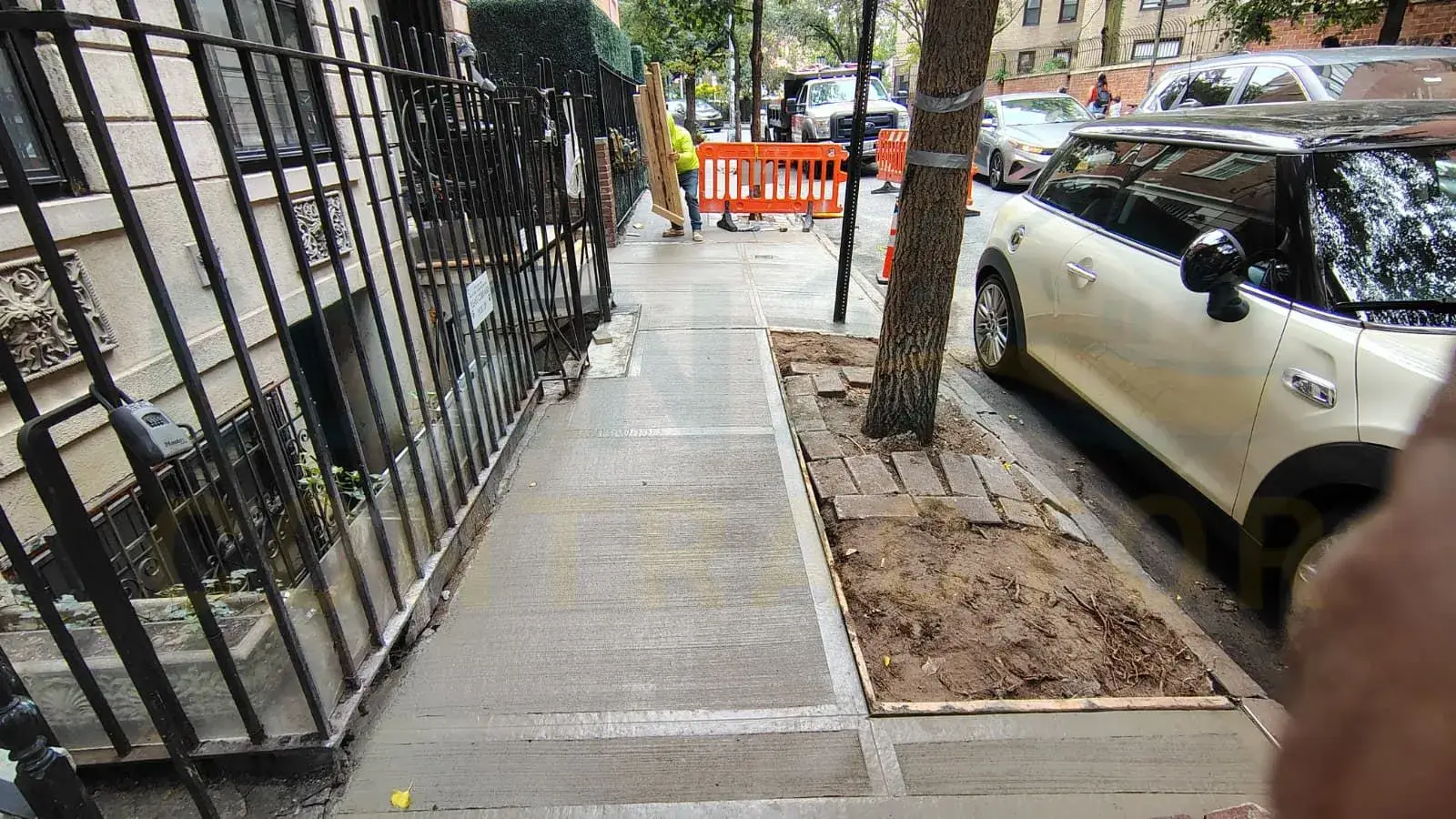
8 Bedford Street sits in the heart of Manhattan's West Village, a neighborhood of historic townhouses, narrow streets, and steady foot traffic, a few blocks from the building made famous by "Friends." The sidewalk in front of this property had become a real problem: tree roots had lifted two flags into trip hazards, and the remaining six were cracked and worn from years of weather and heavy use.
Project Overview
| Project detail | Information |
|---|---|
| Property type | Historic residential |
| Location | 8 Bedford Street, New York, NY 10014 |
| Neighborhood | West Village, Manhattan |
| Area repaired | 8 flags, approximately 200 sq ft |
| Cause of damage | Street tree roots (2 flags) and long-term weathering and wear (6 flags) |
| DOT permit fee | $70 |
| Concrete | High-strength 4,000 PSI ready-mix concrete, broom finish |
What Needed Fixing
Two flags lifted by tree roots
The worst damage was next to the street tree, where roots had pushed two flags up into clear trip hazards. This is one of the most common sidewalk problems NYC property owners face, and it cannot be fixed by simply pouring new concrete on top. The City no longer permits root slicing or root pruning of City trees, so the repair had to work around the roots. A professional arborist advised on the work near the tree, and we installed a root barrier to guide future growth away from the new sidewalk without harming the tree.
Six flags cracked and worn
The other six flags had surface cracks and deterioration from years of freeze-thaw cycles and foot traffic. DOT does not accept patched flags: a flag with a substantial defect has to be fully replaced, so these were removed and rebuilt along with the two root-damaged flags rather than patched.
Permits and DOT Compliance
A DOT sidewalk construction permit was secured before work began, so the repair was fully compliant with NYC standards. Beyond the permit, the details that keep a sidewalk from failing again were built in:
- Expansion joints to give the concrete room to move with temperature changes and prevent new cracking
- Correct slope so the sidewalk drains toward the curb and stays safe and accessible for everyone, including people using wheelchairs or strollers
- Broom finish for traction in wet and icy weather
Our guide to NYC DOT sidewalk repair standards explains each of these requirements in detail.
Working on a Busy West Village Block
The West Village is not an easy place to run a sidewalk job. The streets are narrow, the sidewalks are busy all day with residents, café-goers, and visitors, and there is rarely a quiet moment. Keeping the block passable mattered as much as the repair itself.
We set up clear signage and safety barricades to guide pedestrians around the work zone and scheduled the noisiest work outside peak hours, so neighbors and visitors could keep moving safely while the sidewalk was rebuilt.
How the Work Was Done
Secured the DOT permit
Filed and received the sidewalk construction permit before any demolition.
Set up the work zone
Placed barricades and signage to keep pedestrians moving safely.
Removed the damaged flags
Demolished and cleared the eight flags, about 200 sq ft.
Protected the tree
Worked around the roots with an arborist's guidance and installed a root barrier.
Rebuilt the base
Releveled and compacted the subbase for long-term stability.
Poured new concrete
Placed 4,000 PSI concrete with expansion joints and the correct slope.
Finished the surface
Applied a broom finish for traction and a clean look that suits the block.
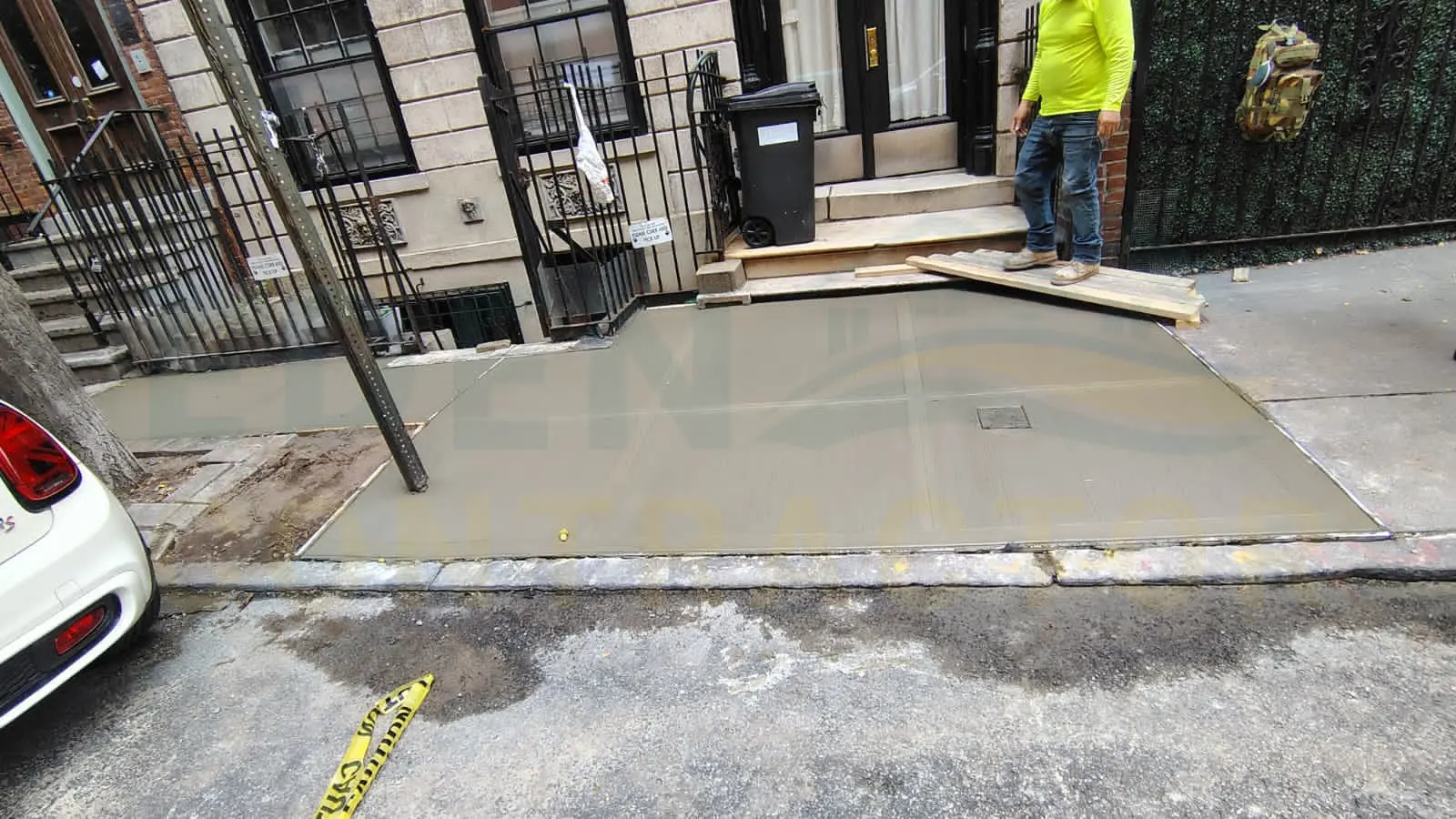
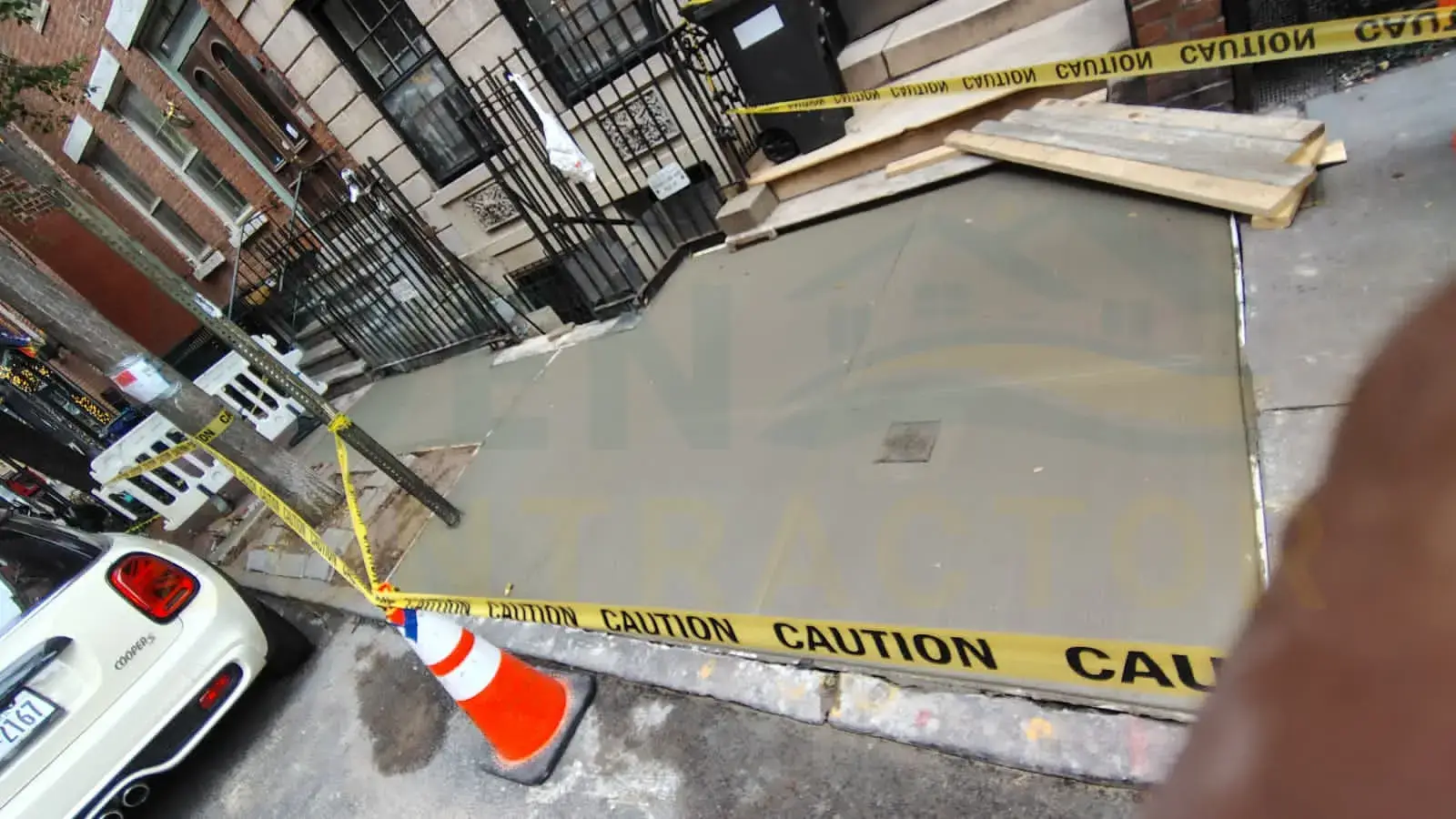
Fixing root damage without harming the street tree, on a narrow, crowded historic block, with a finish that fits the character of the West Village.
The Result
What had been a hazard in front of 8 Bedford Street is now a safe, even walkway for residents and the steady stream of visitors exploring the West Village. For the owner, the rebuilt sidewalk removed the risk of a DOT sidewalk violation and the liability that comes with a trip hazard, and the root barrier gives the new concrete a much better chance of staying level. The broom-finished concrete blends into the historic streetscape instead of standing out from it.