
Sidewalk repair in NYC runs $8 to $25 per square foot for DOT compliant work, including the site inspection, permit, repair, and DOT sign-off. A single cracked or broken flag is $800 flat. Most residential jobs land between $1,000 and $3,000, commercial projects average around $7,000, and curb work is priced separately at $50 to $80 per linear foot. This page covers what moves your number inside those ranges, and what the City charges if you let the deadline pass.
For the legal framework behind those deadlines, read the complete NYC sidewalk repair and violation removal guide.
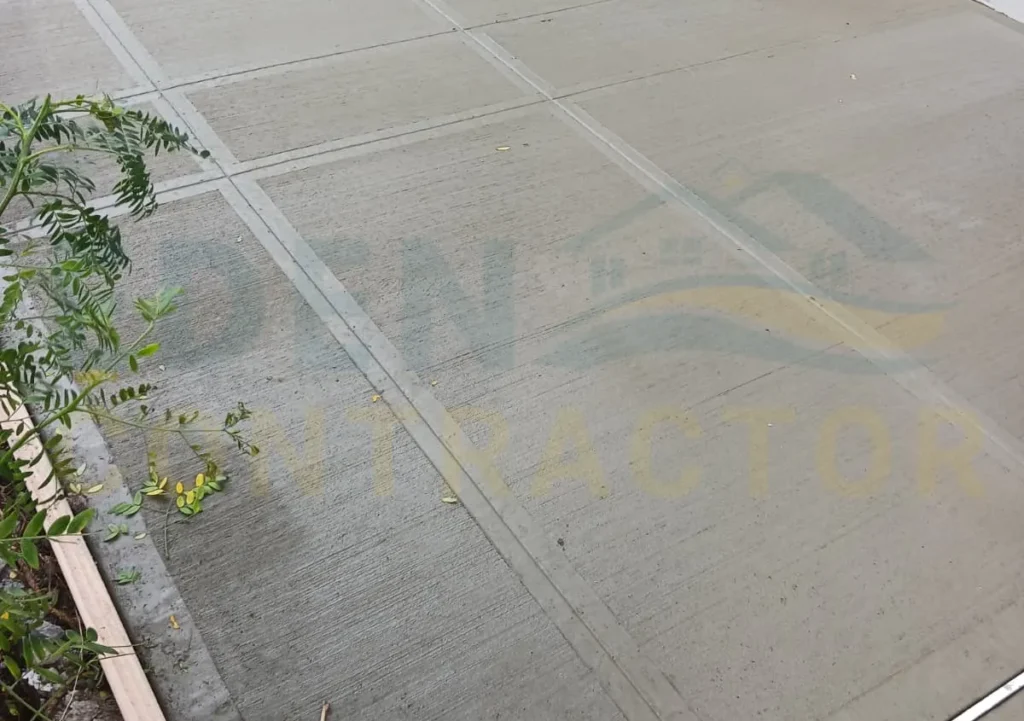
These are the rates Eden Contractors NY quotes across the Bronx, Brooklyn, Manhattan, and Queens. Every rate includes the free site inspection, DOT permit acquisition, the repair itself, and the DOT approval visit. Permits are not billed as a separate line item at the end.
| Job type | Price | What it covers |
|---|---|---|
| Single slab or flag replacement | $800 flat | One cracked, broken, or heaved flag on a standard access job |
| Sidewalk repair and DOT violation removal | $8 to $25 per sq ft | Permit, repair, DOT inspection, and violation dismissal paperwork |
| Concrete curb repair and replacement | $50 to $80 per linear ft | Full curb restoration to NYC DOT standards, permits included |
Per square foot pricing is useful for comparing quotes, but most owners want the total. These are the ranges we see most often once flag count and access conditions are factored in.
| Property type | Typical total | Common scope |
|---|---|---|
| Residential, one to three family | $1,000 to $3,000 | Two to six flags, standard frontage, no subbase work |
| Commercial or mixed use | Around $7,000 | Larger frontage, off hours scheduling, pedestrian protection |
| Single flag emergency repair | $800 | One flagged section under a 10 day emergency notice |
Homeowners can see typical scope on our residential sidewalk repair page.
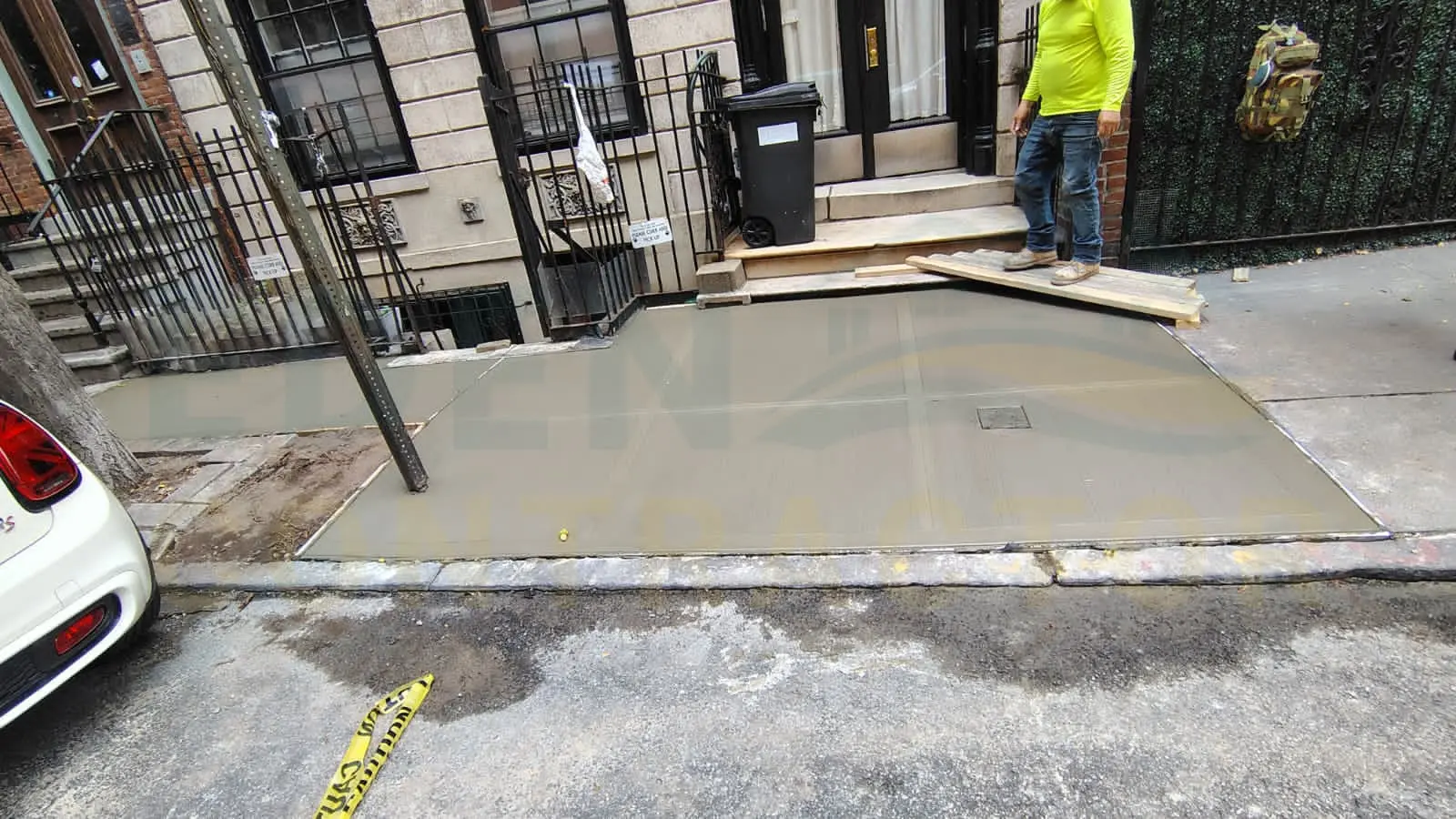
Two properties on the same block can get quotes that differ by thousands. Four things account for almost all of that gap.
Six damaged flags in a row cost less per flag than six scattered across a long frontage. A continuous run lets the crew pour once. Scattered flags mean repeated saw cutting, separate forms, and more finishing edges.
If a City tree lifted the slab, the root has to be pruned or barriered before the pour, which needs a Tree Work Permit from NYC Parks on top of the DOT permit. If the subbase has eroded, it must be excavated, backfilled, and compacted before any concrete goes down. Both push a job toward the upper end. See tree root damage sidewalk repair for how that scope runs.
NYC DOT specifies the mix, not the contractor. We pour 4,000 PSI concrete on every job to meet DOT strength requirements and survive the freeze-thaw cycle. Sealed one inch expansion joints are required at every property line, where the sidewalk meets the curb, and every 8 to 15 feet along the run.
Narrow frontage, no truck access, scaffold in the way, or a route that has to stay open to foot traffic all add labor hours. Commercial frontages frequently need off hours scheduling, which is the single biggest reason commercial totals sit above residential. Our four step repair process sets out how scheduling is handled.
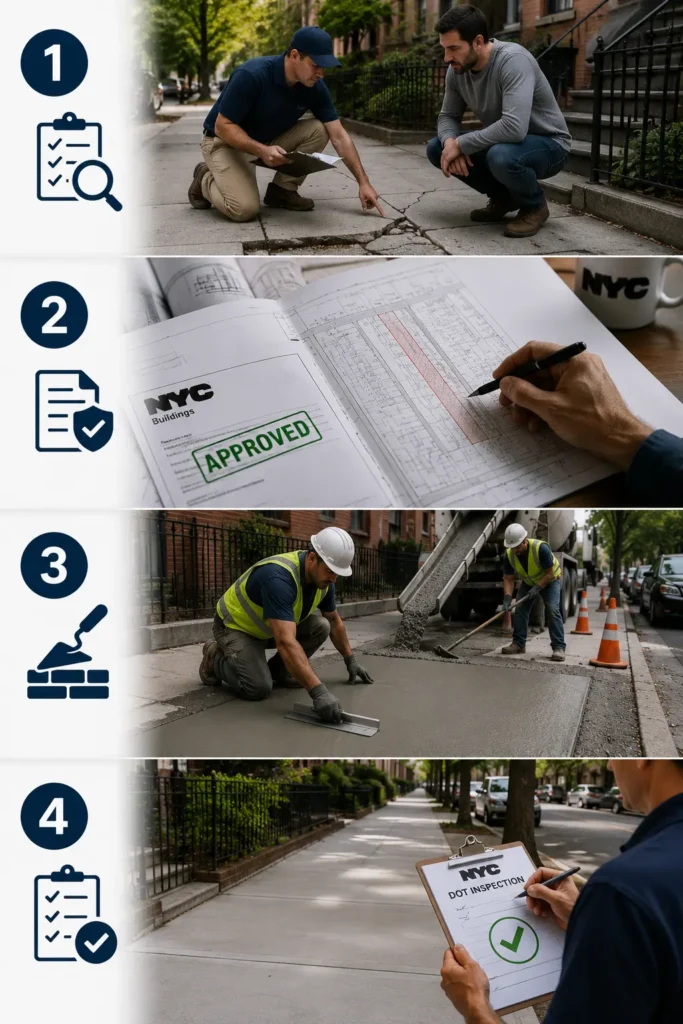
A sidewalk construction permit from NYC DOT is mandatory before any work begins. The fee is $70 and it covers up to 300 linear feet for one property. Only a licensed contractor can pull it, and they file on your behalf. Our quoted rates already include this.
If your property is on a corner and work is needed on both frontages, that is two separate permits rather than one. On a recent Manhattan job the permitting came to $140 for exactly this reason. Factor it in when you compare a corner lot quote against a mid-block neighbor's.
Any repair touching roots from a City-owned tree needs a Tree Work Permit from NYC Parks alongside the DOT permit. Parks inspects and approves within 90 days, which affects your timeline more than your budget, but it matters a great deal when you are working against a 75 day violation deadline.
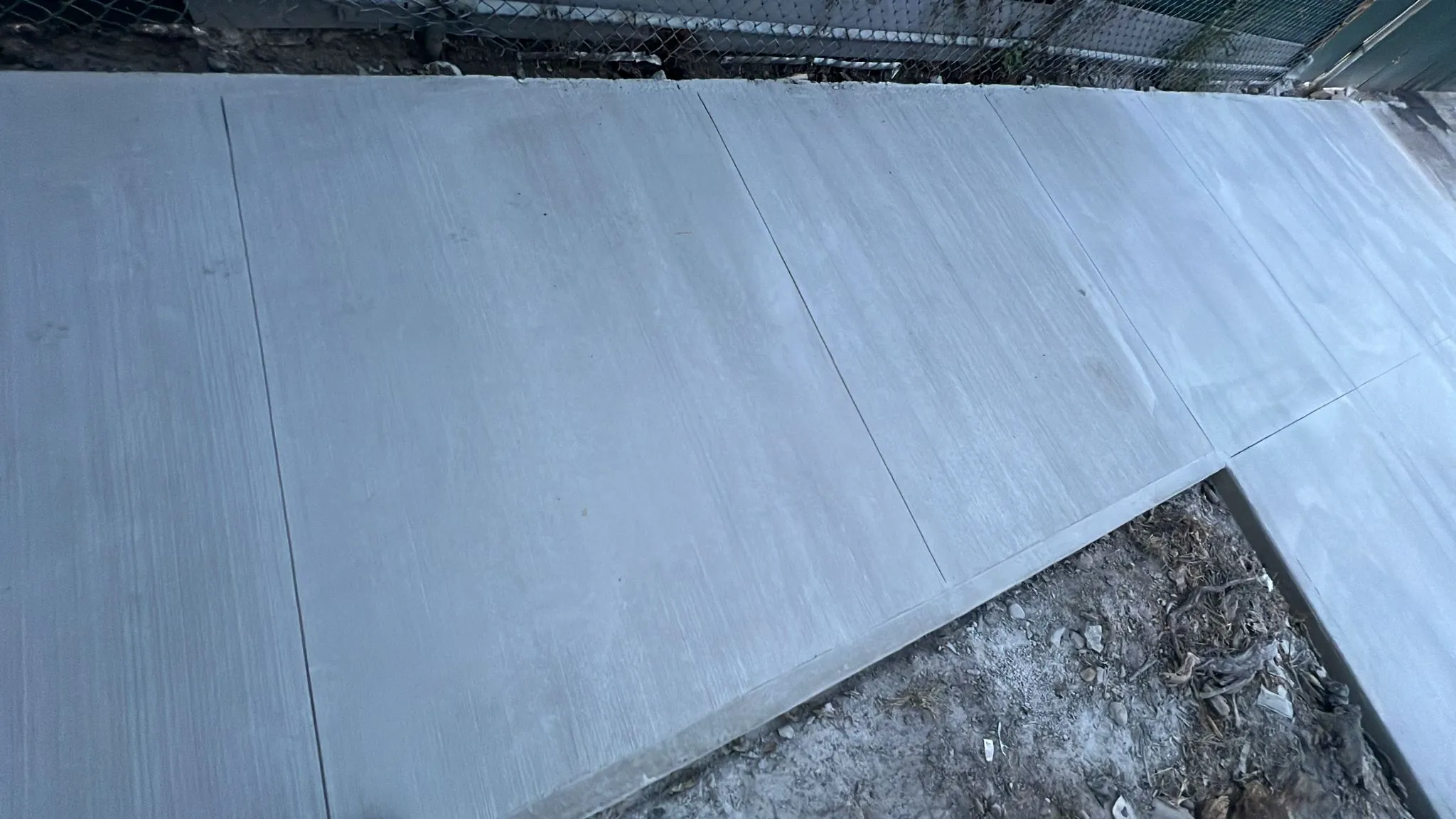
This is the number most cost guides leave out, and it is usually larger than the repair itself.
A DOT Notice of Violation carries no fine. What it carries is a deadline. Under Administrative Code Section 19-152 you have 75 days to complete the repair, or 10 days where DOT sets a shorter period for a hazard. Miss it and the City may perform the work itself and bill you for its cost plus administrative expenses of up to 20 percent. Our DOT sidewalk violation removal service handles the repair and the dismissal paperwork inside that window.
Once that City charge is entered it becomes a lien on the property ahead of every other lien except taxes, with interest added if it goes unpaid for 90 days. It has to be cleared before a sale or refinance can close, and clearing a violation is a separate step from clearing the lien. See sidewalk lien removal and our explainer on what a sidewalk lien is.
Under Section 7-210, owners carry personal injury liability for a dangerous sidewalk condition. That exposure exists every day the defect sits there. One, two and three family homes that are owner-occupied and used exclusively for residential purposes are exempt. All three conditions must be met, and damages are decided case by case.
| Scenario | Your cost |
|---|---|
| Standard single slab replacement | $800 flat |
| Larger sidewalk repairs | $8 to $25 per sq ft |
| DOT Sidewalk Construction Permit | $70 for every 300 linear feet |
| City-performed repair after a missed deadline | City's cost plus administrative expenses up to 20% |
| Unpaid City repair bill | Lien ahead of all but taxes; interest after 90 days |
Sealant and patch kits work on a private patio. They do not work on a public sidewalk in New York City, and the reasons are legal rather than technical.
Sidewalk work in NYC requires a contractor licensed by NYC DOT and, for work over $200, a valid Home Improvement Contractor License from the Department of Consumer and Worker Protection. Permits are issued to licensed contractors only. Without one the work is unpermitted no matter how well it was done.
After repairs you call 311 to request a dismissal inspection. The inspector checks the work against DOT design and material standards covering mix strength, slope, cross slope, expansion joint placement, and detectable warning surfaces at ramps. Surface patchwork over a structural crack is itself a listed defect. A failed reinspection means paying twice and losing weeks off the clock.
Using unapproved materials, including asphalt in place of concrete, is one of the defect categories DOT inspectors cite. A cheap patch does not simply fail to clear the violation, it can generate a new one. Our NYC DOT sidewalk repair standards guide sets out what inspectors measure.
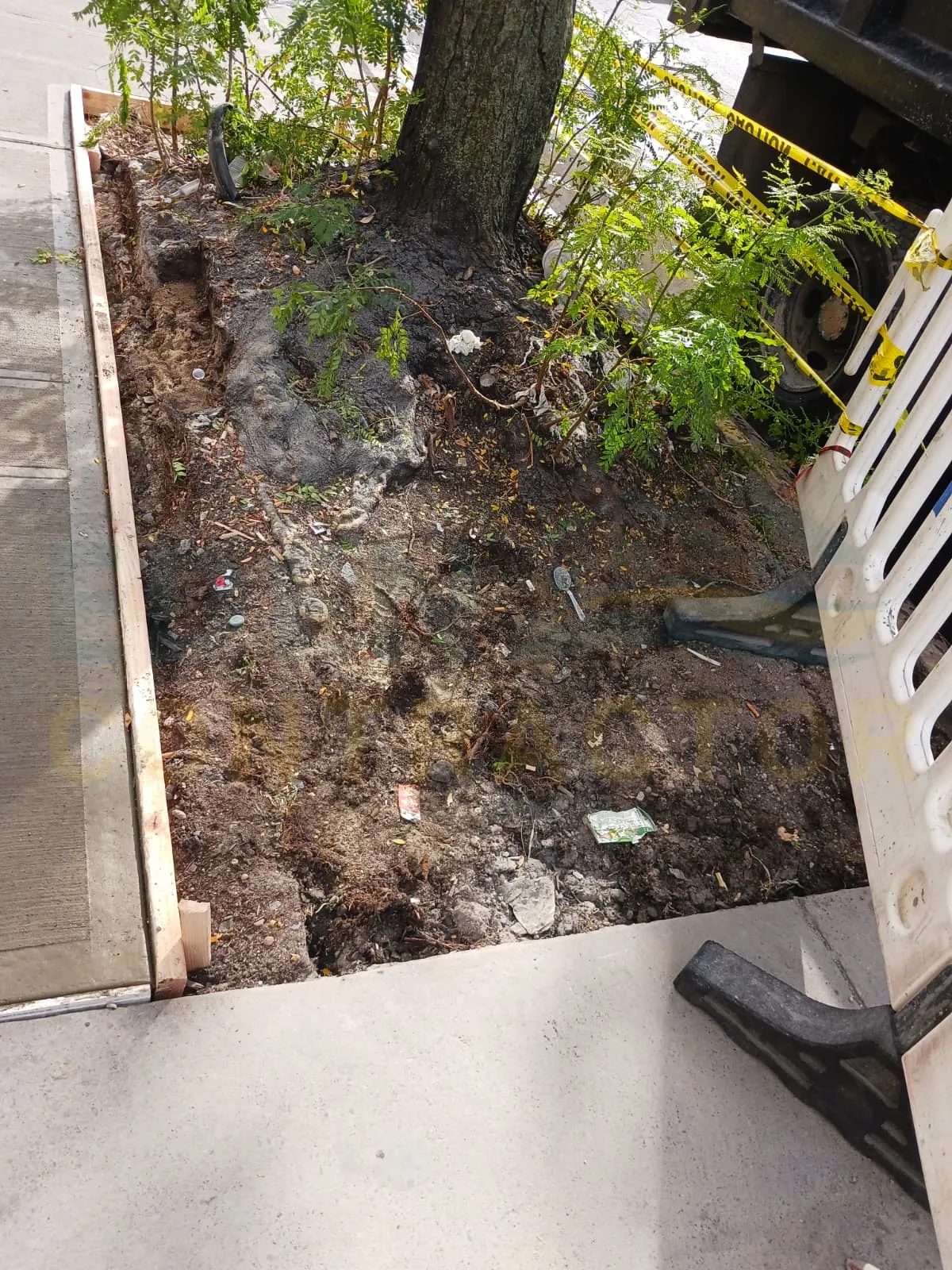
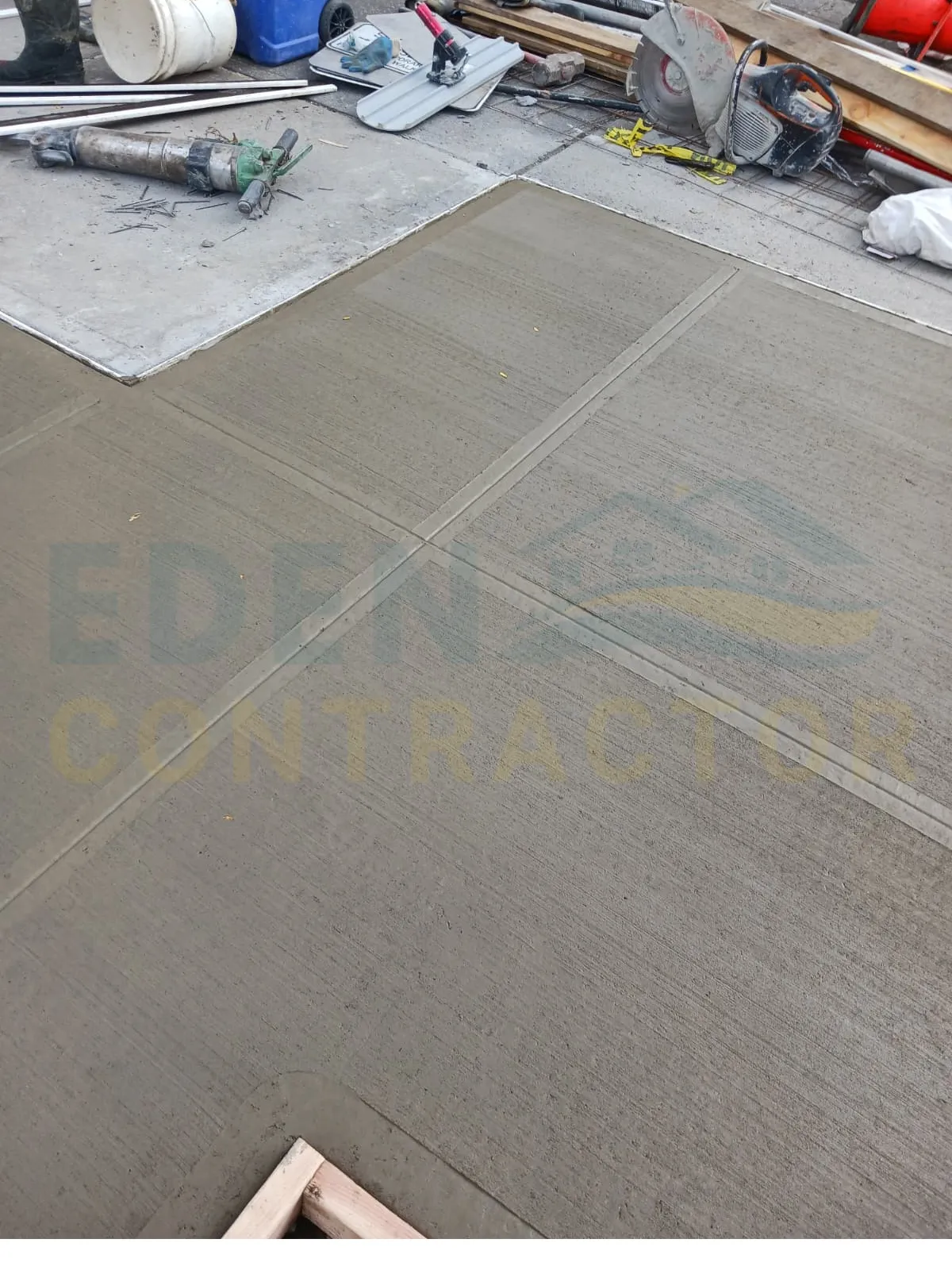
NYC Parks repairs severe tree root damage at no cost, but eligibility is narrow. You must own and occupy a one, two, or three family home in Tax Class 1 that is not used for commercial purposes, and the damage must be caused solely by City-owned tree roots. Condos, co-ops, four plus unit buildings, commercial property, and any home the owner does not live in are excluded.
The program runs on a limited annual budget and a severity-based priority score rather than a queue, so waits can run into years. Owners facing a pending sale, a refinance, or active injury exposure usually do better hiring privately now and pursuing reimbursement after.
If you paid out of pocket for damage caused by City tree roots, you have 90 days from completion to file a reimbursement claim with the NYC Comptroller's Office. Keep before and after photos, the Tree Work Permit, the DOT sidewalk construction permit, any Parks design recommendations, and all contractor invoices with proof of payment. Missing paperwork is the usual reason these claims fail.
The per square foot rate does not change by borough. What changes is the conditions on the ground, and conditions decide where inside the $8 to $25 range your job lands.
The highest share of commercial frontage in the city, which puts vault lights, cellar doors, and utility hardware inside the work area. Each one has to be worked around and reset flush. Restricted truck access and off hours scheduling push Manhattan jobs toward the top of the range more often than any other borough.
Mature London plane and Norway maple street trees across Park Slope, Bed-Stuy, Flatbush, and Crown Heights make root work the dominant cost variable. Jobs frequently need a Tree Work Permit alongside the DOT permit, plus root pruning and barrier installation before the pour. Brownstone frontages also limit staging space.
Wide residential frontages and a high count of driveway aprons. The apron transition where a driveway meets the public sidewalk is a separate scope item and a frequent violation trigger on its own. Better truck access across Bayside, Fresh Meadows, and Howard Beach keeps mobilization costs lower than the inner boroughs.
A large stock of original concrete poured in the 1950s through 1970s, now past its 20 to 30 year service life. That shifts more jobs from partial repair toward full replacement, which raises the total even though the per square foot rate is unchanged. Subbase erosion under older pours adds excavation.
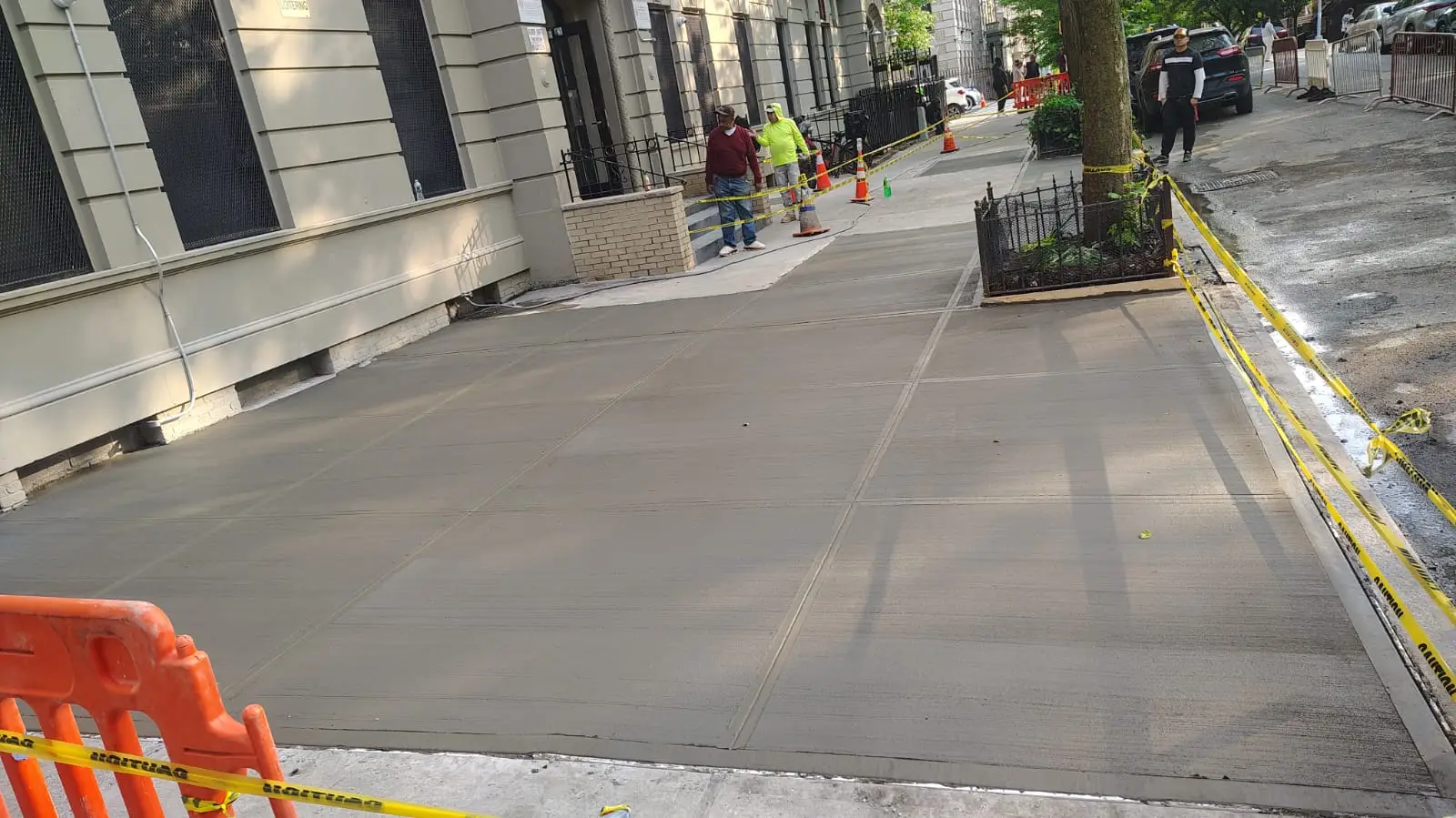
March through May is when winter damage becomes visible and DOT enforcement intensifies. Scheduling in early spring, before a violation is issued, removes the deadline pressure that forces rushed scheduling and premium rates.
Your Notice of Violation includes a diagram showing exactly which flags are cited, and you are only obligated to repair those. A contractor quoting your whole frontage when the diagram cites three flags is quoting beyond scope. Check the Preliminary Inspection Report against your actual frontage first, including width, dimensions, trees, cellar doors, and utility caps.
If neighboring properties are also cited, a single mobilization across several frontages spreads setup, permit filing, and concrete delivery across more square footage. This is the most reliable way to move toward the bottom of the range.
Relevelling a sunken flag without addressing the eroded subbase or the root that caused it means paying again within a season or two. See how to fix sunken sidewalk slabs for the four methods and when each holds.
Free site inspection, no obligation. We measure, check your violation diagram against your actual frontage, and hand you a written scope and price.
Get a Free Estimate TodayDOT compliant sidewalk repair costs $8 to $25 per square foot. The lower end applies to standard access jobs with no tree root or subbase work. The upper end applies where roots must be cut and barriered, the subbase has eroded, or the crew works around vault lights and utility hardware. The rate includes inspection, permit, repair, and DOT approval.
A single cracked or broken flag is $800 flat on a standard access job. That is a fixed rate rather than a square foot calculation, because mobilization, saw cutting, and permit filing cost the same whether the job is one flag or three.
Yes. Permit acquisition is included at no extra charge. The DOT sidewalk construction permit fee is $70 and covers up to 300 linear feet for one property. Corner properties needing work on both frontages require two permits.
Concrete curb repair and replacement is priced at $50 to $80 per linear foot, separate from sidewalk flag pricing. All permits and DOT inspections are included. See curb repair NYC.
No. Sidewalk work in NYC requires a contractor licensed by NYC DOT, and for work over $200 a Home Improvement Contractor License from DCWP. Permits are issued to licensed contractors only. Unpermitted work does not clear a violation and can fail reinspection, meaning you pay twice and lose time off the 75 day deadline.
After the deadline the City may perform the repair and bill you for its cost plus administrative expenses of up to 20 percent. That charge becomes a lien ahead of all other liens except taxes, with interest if it goes unpaid for 90 days.
Sometimes. The NYC Parks Trees and Sidewalks Program covers severe tree root damage at no cost, but only for owner-occupied one, two and three family homes in Tax Class 1 with no commercial use, where roots are the sole cause. The program is budget limited and priority scored, so waits can run into years.
You have 90 days from repair completion to file a claim with the NYC Comptroller's Office. You need before and after photos, a Tree Work Permit from NYC Parks, a DOT sidewalk construction permit, any Parks design recommendations, and contractor invoices with proof of payment.
Commercial frontages are larger, carry heavier foot traffic, and frequently require off hours scheduling plus pedestrian protection to keep access open during business hours. Those labor and scheduling factors, not the concrete, push commercial totals toward $7,000 and above. See commercial sidewalk repair.
Most residential projects are completed within one to three days once permits are approved. Work begins within 24 hours of estimate approval, and we handle the DOT reinspection and violation dismissal paperwork after completion.