
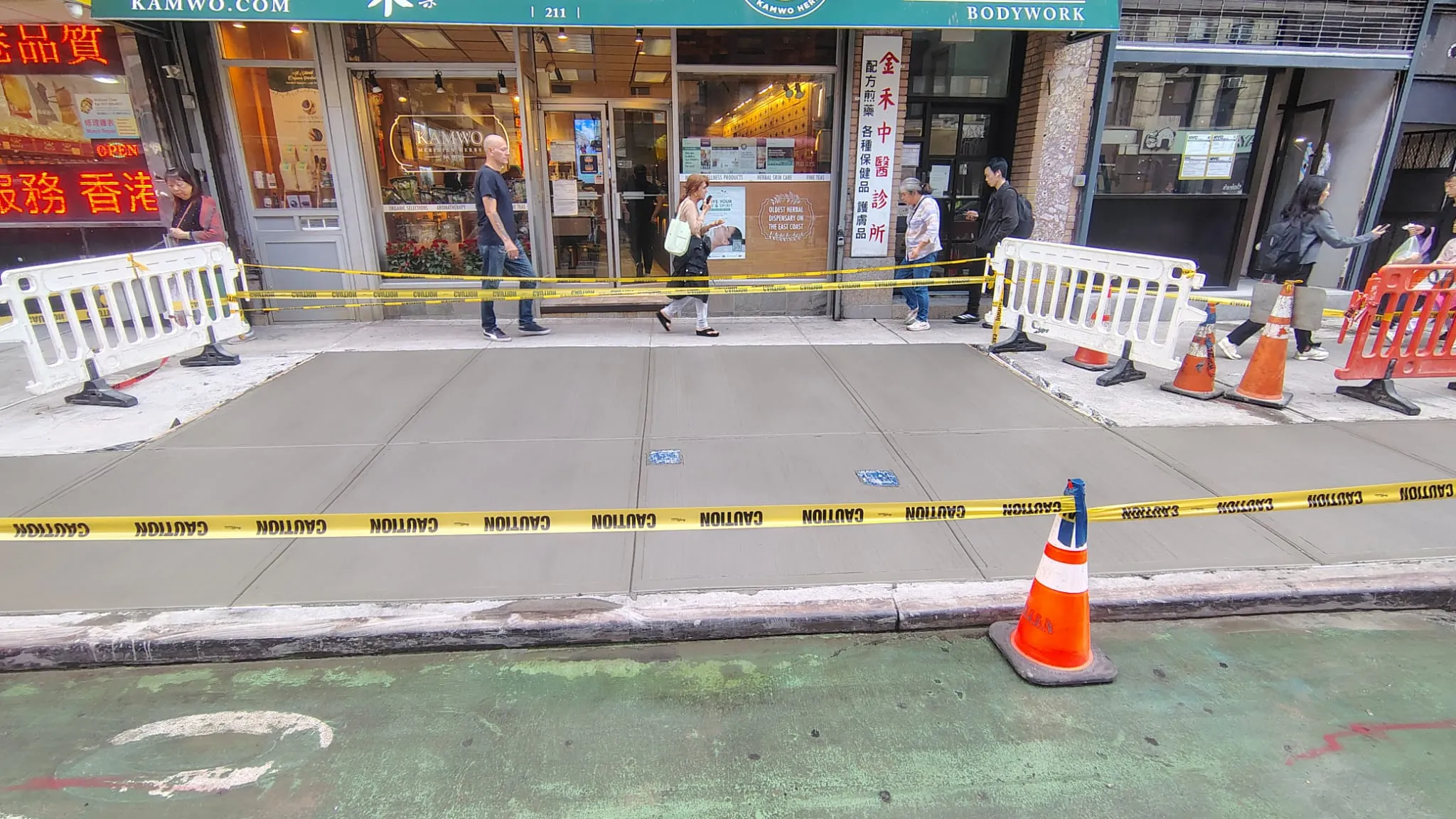
The sidewalk at 211 Grand Street sits in front of a long-running retail storefront in the middle of Chinatown's commercial corridor. Customers coming and going, deliveries, and steady foot traffic along Grand Street had worn the concrete down to the point where repair was no longer optional. The owner needed two things handled together: the physical repair and the clearance of an open NYC DOT sidewalk violation.
Project Overview
| Project detail | Information |
|---|---|
| Client | Commercial property owner |
| Location | 211 Grand Street, New York, NY 10013 |
| Neighborhood | Chinatown, Manhattan |
| Area repaired | Approximately 350 sq ft |
| Slabs replaced | 14 full flags |
| Cause of damage | Heavy pedestrian traffic and long-term wear |
| Project cost | Approximately $8,200, permits included |
| Timeline | Up to 60 days, including approvals, construction, inspection, and violation sign-off |
Why This Sidewalk Wore Out
An active commercial frontage, not a quiet block
The property is on Grand Street between Mott and Elizabeth Streets, a stretch lined with shops, food businesses, and neighborhood services. People walk this block all day to reach storefronts, nearby streets, and transit, and the businesses around it receive deliveries throughout the week. A sidewalk outside a single-family home sees a fraction of that use.
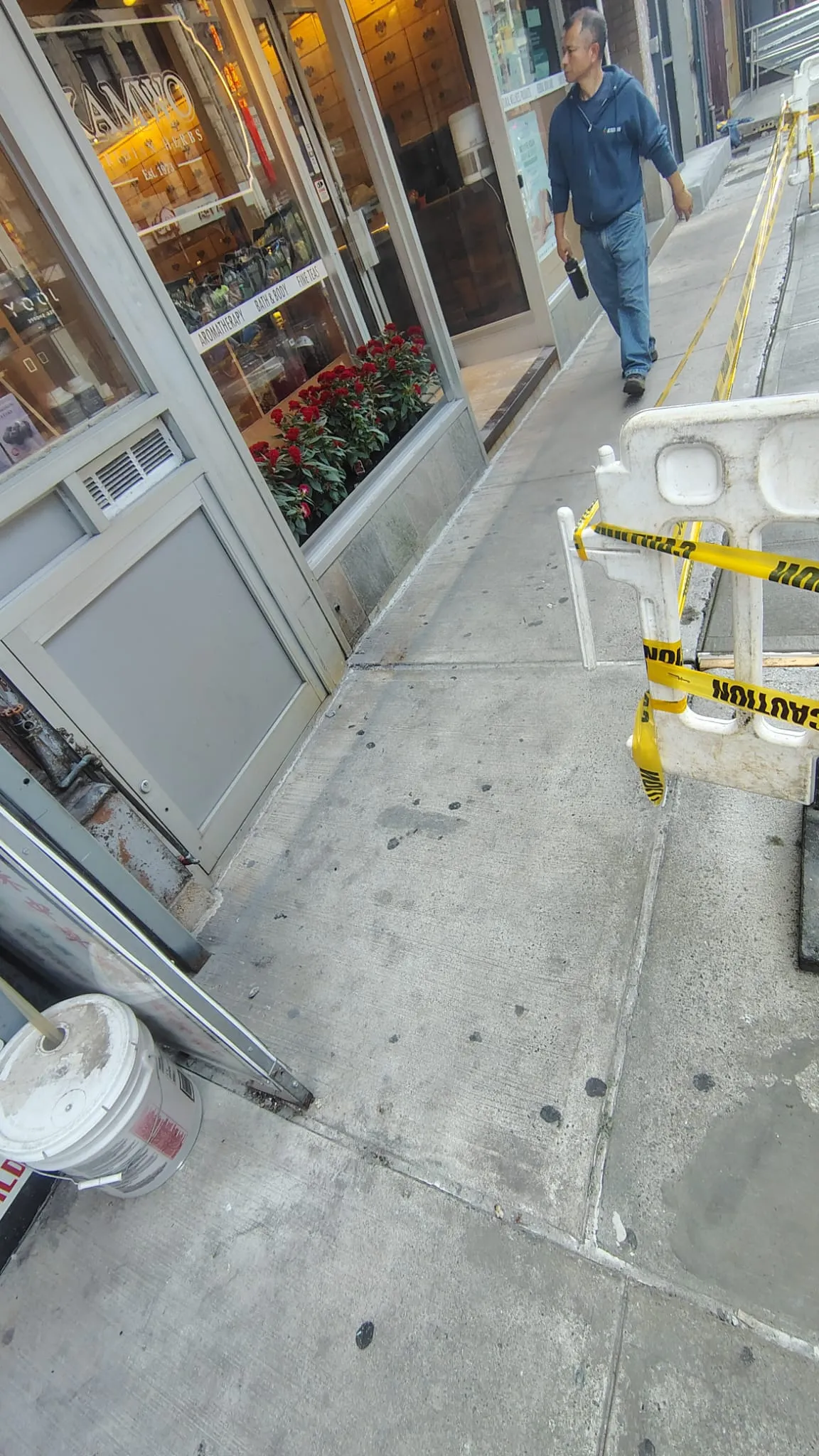
Years of that load had cracked and worn the existing concrete across the frontage. Patching individual spots would have left a mix of old and new concrete, and DOT does not accept patched flags anyway: a flag with a substantial defect has to be fully replaced to DOT standards.
Why the stakes are higher for a commercial owner
Under Section 7-210 of the NYC Administrative Code, most property owners, including commercial owners, are responsible for keeping the sidewalk in front of their property in good repair and can be held liable for injuries a defective sidewalk causes. On a block this busy, a worn sidewalk is a daily liability, not just an open violation.
How We Planned and Built the Repair
Permits first
Before any demolition, we secured the DOT sidewalk construction permit and handled the sidewalk closing requirements, and the permit costs were included in the project price. Sorting the paperwork first meant construction could run without stopping for missing approvals, and the finished work would be eligible for a dismissal inspection.
Working around an open storefront
The business stayed open throughout the job, so the work zone was set up to keep the store entrance usable and pedestrians moving safely along the block. Demolition and pouring were sequenced so the frontage was never fully blocked.
Removing and rebuilding the frontage
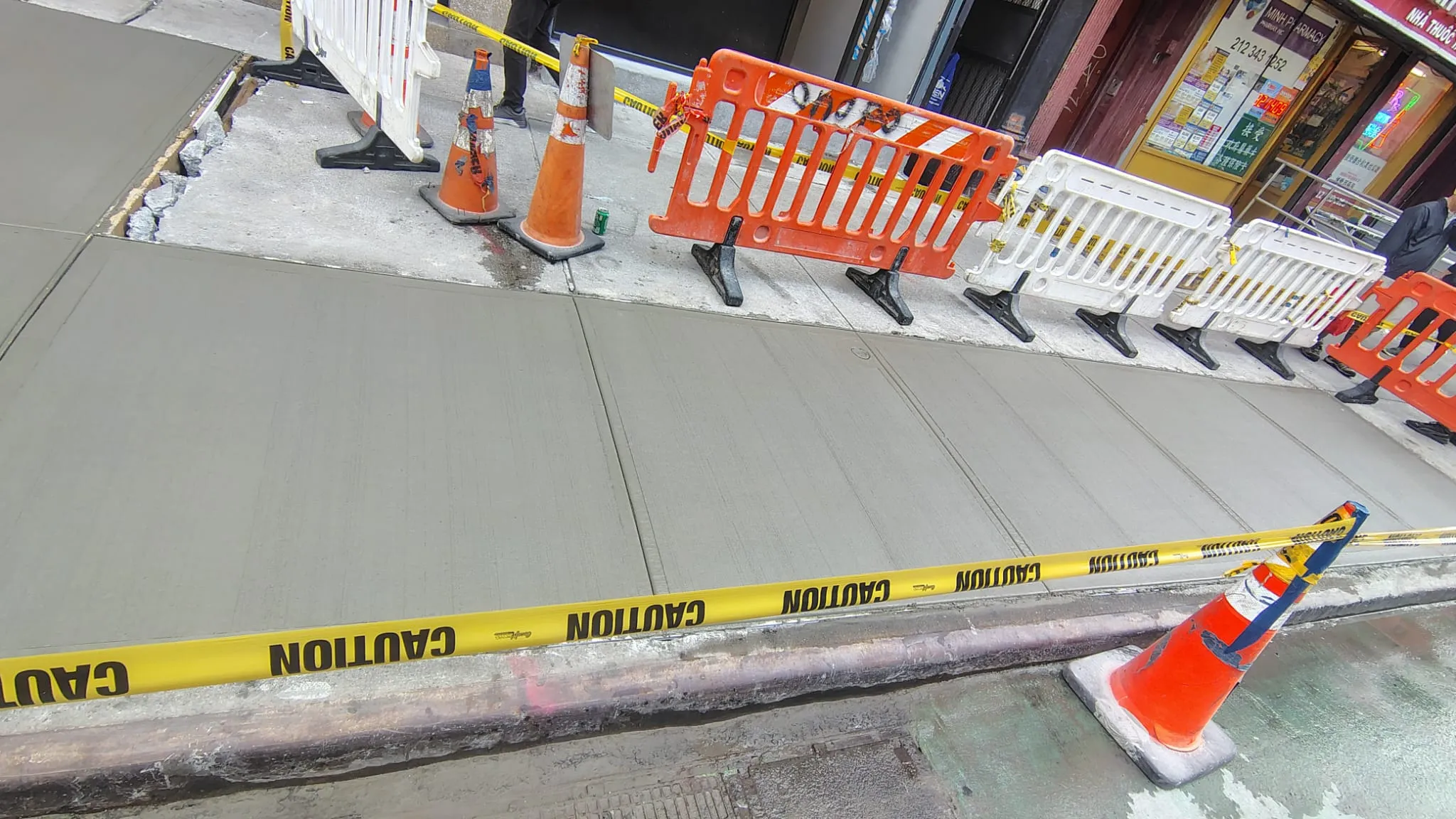
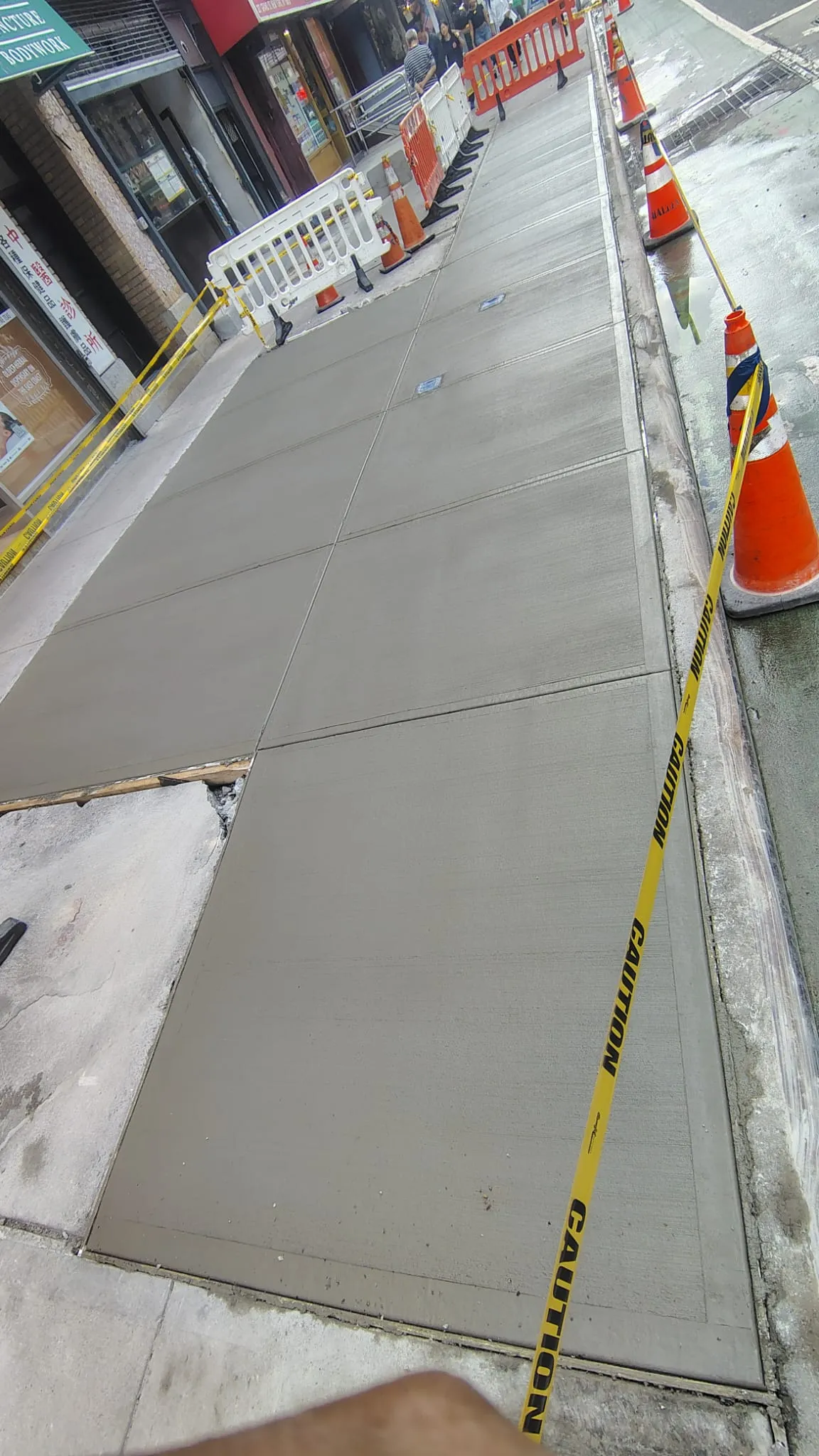
All 14 damaged flags were saw-cut, removed, and hauled away. With the old concrete gone, the crew prepared and compacted the base so the new slabs would have stable support, then set the new concrete to meet the existing sidewalk without raised edges or dips. On a sidewalk that carries this much foot traffic, even a small lip at a joint becomes a trip hazard.
Step-by-Step Repair Process
Inspected the frontage
Reviewed the damaged sections and the violation, and confirmed 14 flags needed full replacement.
Defined the scope
Matched the repair scope to the defects listed on the violation so nothing would fail re-inspection.
Secured permits
Obtained the DOT sidewalk permit and handled sidewalk closing requirements before demolition.
Set up the work zone
Organized barricades and a pedestrian route around an open storefront.
Removed the damaged flags
Saw-cut and demolished about 350 sq ft of worn concrete.
Prepared the base
Compacted the subbase for stable, even support.
Poured the new sidewalk
Placed and finished new concrete flush with the surrounding pavement.
Cleaned the site
Removed debris and readied the frontage for inspection.
Requested the dismissal inspection
Filed for the DOT inspection once the concrete had cured.
Followed through to sign-off
Tracked the violation until DOT signed off on the repair.
Clearing the DOT Violation
A new sidewalk does not close a violation on its own. DOT has to inspect the finished work and confirm the defects were corrected before the violation is dismissed. We filed the inspection request and stayed with the process until sign-off, so the owner did not have to deal with the city separately.
Good to know: if the City has already done the work and billed the owner, the result is a lien, and clearing it is a separate step after the violation is dismissed. Our sidewalk lien removal guide explains how that works.
Replacing 14 slabs on one of Chinatown's busiest commercial blocks without shutting down the storefront or the sidewalk, and carrying the job past construction all the way to DOT sign-off.
The Result
The frontage at 211 Grand Street now has a continuous, even walking surface instead of a patchwork of worn concrete. The repair was completed for approximately $8,200 including permits, and the full process, from approvals through inspection and violation sign-off, took up to 60 days. The owner dealt with one contractor for the permits, the construction, and the city inspection.
“The team handled the permits, replaced all 14 sidewalk slabs, and took care of the inspection and violation sign-off. They kept the work organized despite the busy pedestrian traffic on Grand Street. It made the whole process much easier for us.”
Property owner, 211 Grand Street, Manhattan