
The sidewalk is the first thing a buyer, tenant, or customer steps on, and in NYC it is also a legal obligation. Keeping it in good repair protects pedestrians, keeps DOT violations and liens off your property record, and limits your exposure if someone trips. This guide covers what a well-maintained sidewalk actually does for NYC property owners and their neighborhoods, and what neglect costs.
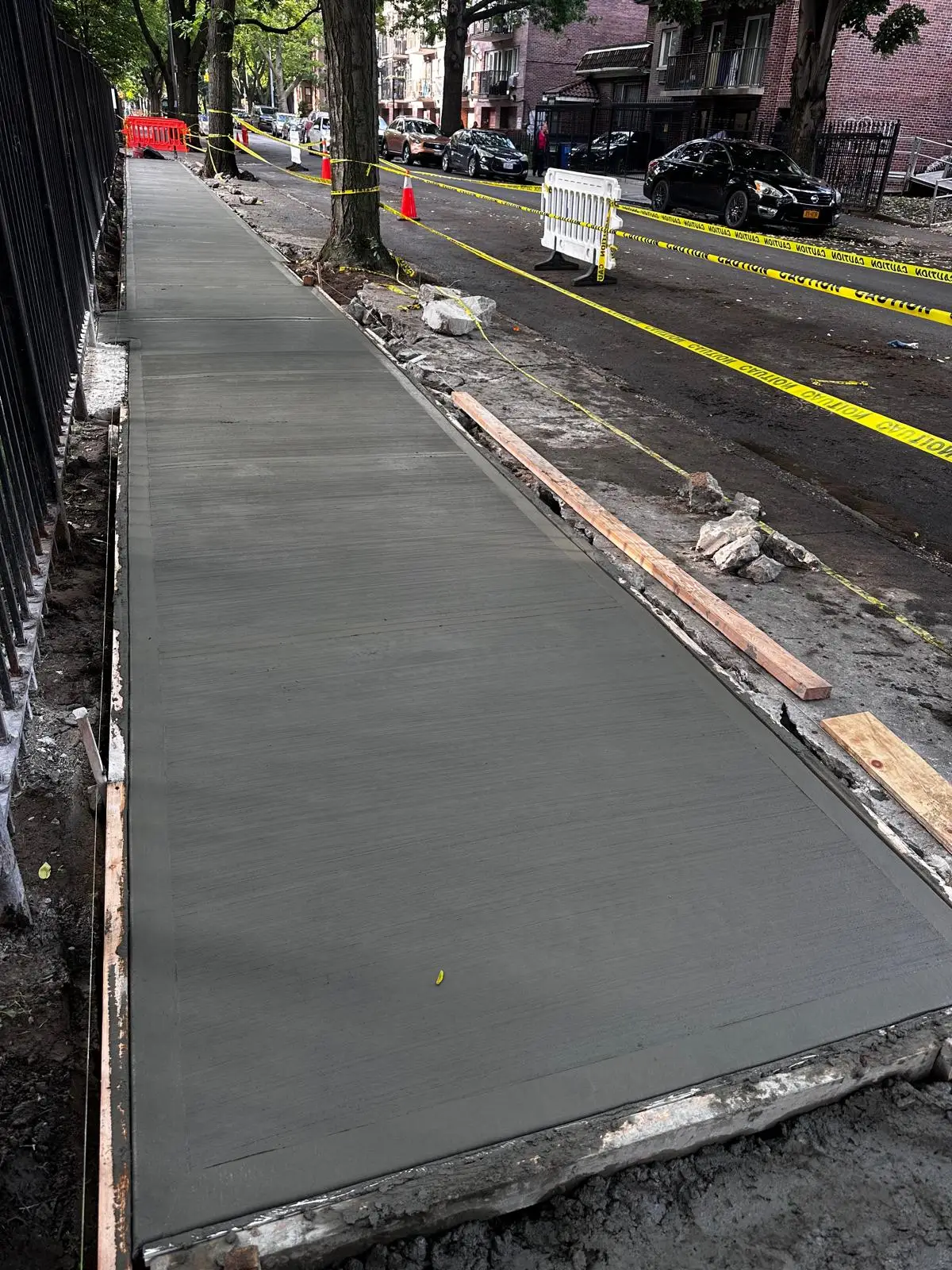
The sidewalk is part of the frontage everyone sees before they reach the door. Smooth, level flags with clean joints read as a property that is looked after. Raised slabs, broken corners, and patched concrete suggest deferred maintenance and invite questions about what else has been left.
For rentals and storefronts the sidewalk is not a one-time impression. Tenants, customers, and delivery workers cross it every day, so its condition becomes part of how the property feels to use.
A cracked sidewalk is cosmetic until it becomes a record. An open DOT sidewalk violation, or a lien from City-performed repairs, shows up in a title search, and buyers and lenders expect it cleared before closing. Our guide to sidewalk liens in NYC explains how that happens.
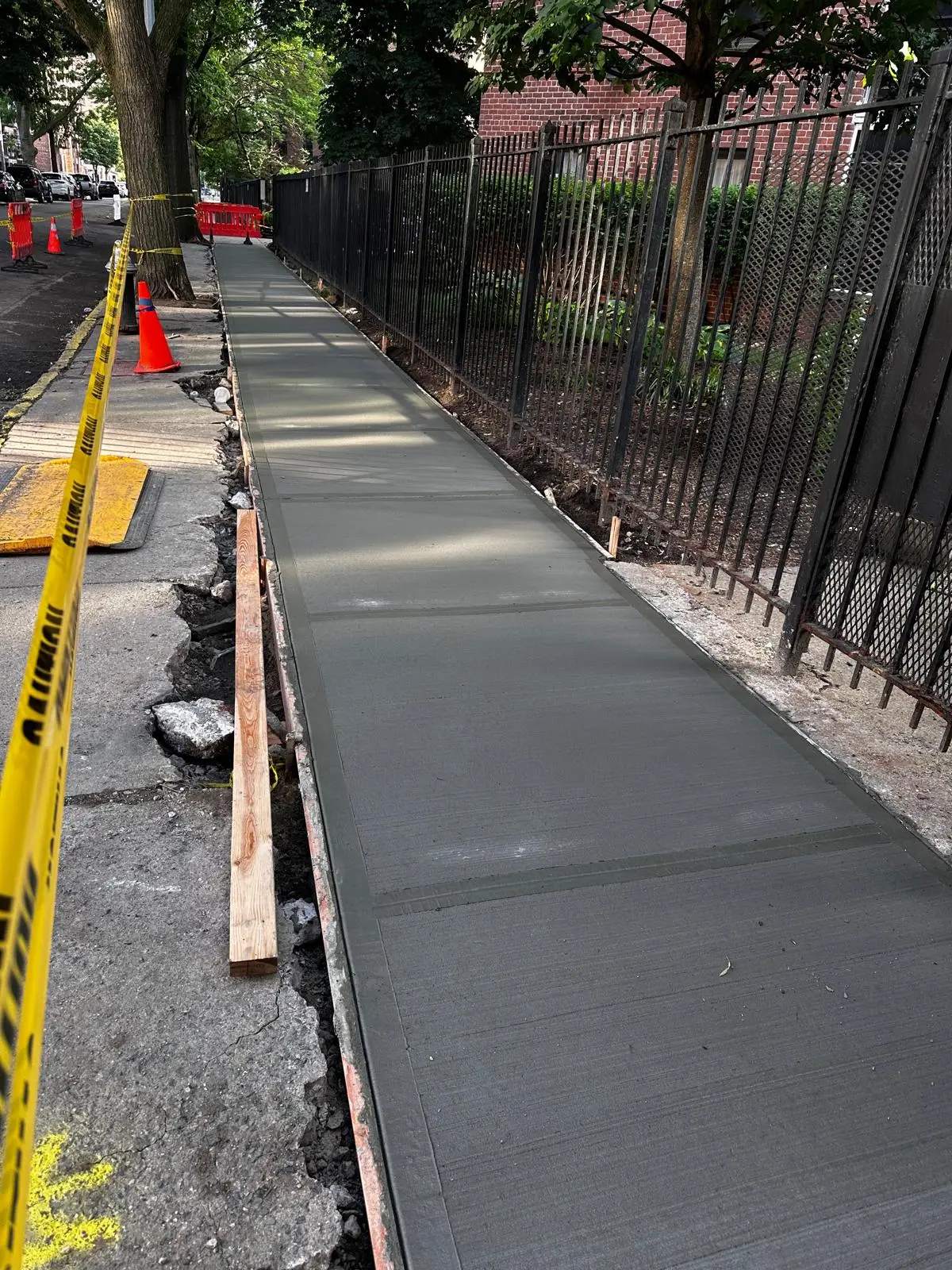
The most cited study on this topic is Walking the Walk by Joe Cortright for CEOs for Cities, which analyzed about 94,000 home sales in 15 markets. It found that a one-point increase in Walk Score was associated with $700 to $3,000 in added home value, and that above-average walkability carried a premium of roughly $4,000 to $34,000 depending on the metro area.
Those figures are real, but they measure something different from sidewalk repair. Walk Score rates how many destinations such as shops, schools, and parks sit within walking distance of a home. It does not score the condition of the sidewalk in front of it.
The clearest financial link between sidewalk condition and property value is legal. Under Administrative Code Section 19-152, if an owner does not repair within the deadline, the City may do the work and charge the cost plus administrative expenses of up to 20 percent. Once entered, that debt becomes a lien ahead of every other lien on the property except taxes, and interest is added if it goes unpaid for 90 days. A lien has to be cleared before a sale or refinance can close.
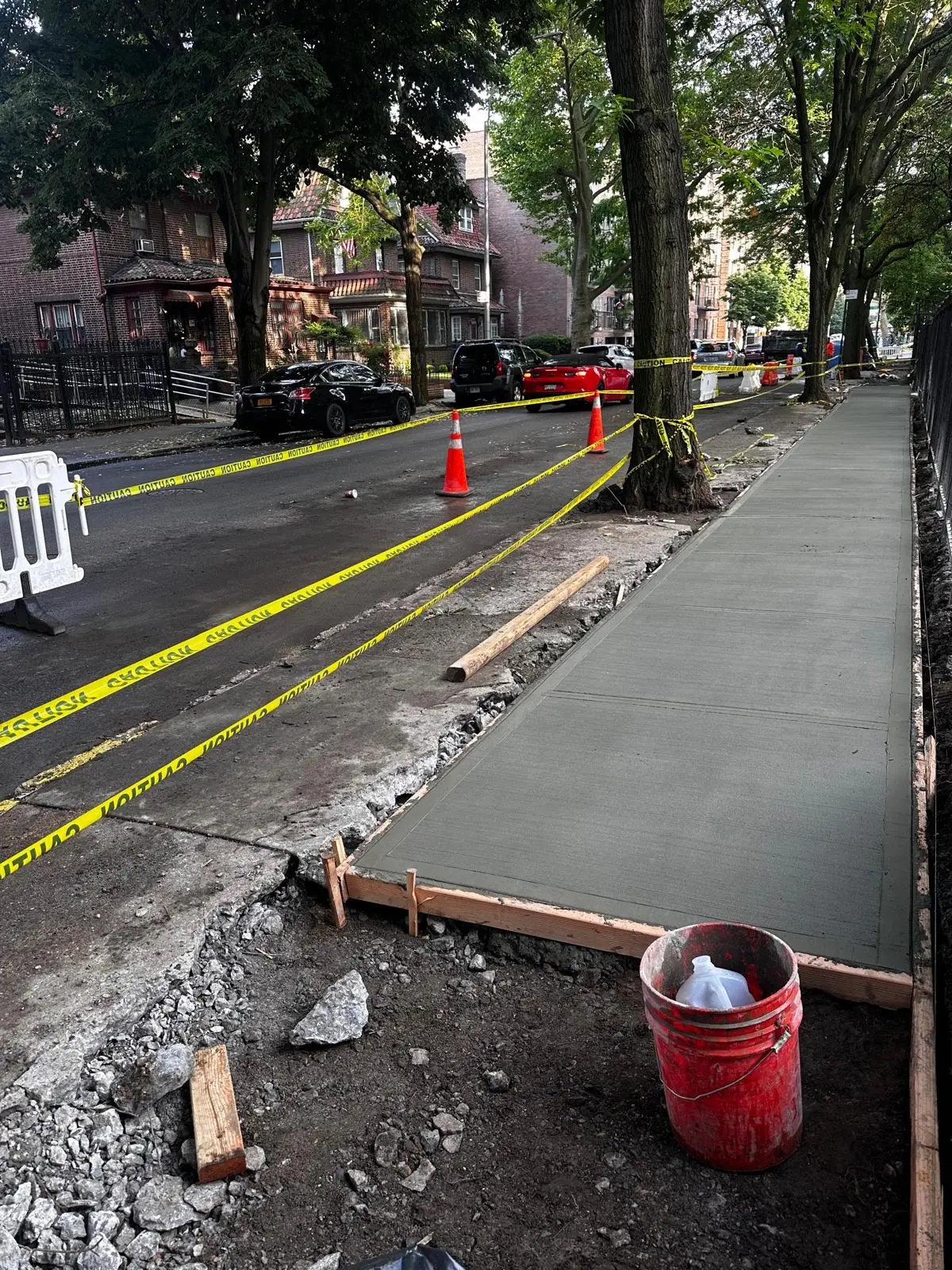
In NYC the hazard is rarely the absence of a sidewalk. It is the condition of the one already there. The conditions DOT treats as substantial defects include a vertical difference of 1/2 inch or more between adjacent flags, missing flags, flags cracked so badly that pieces can loosen, and undermined flags with voids beneath. Those are the conditions an inspector cites and the ones a pedestrian catches a toe on.
Whether you need residential sidewalk repair for a raised slab or commercial sidewalk repair for a busy storefront entrance, keeping the surface level is both a legal obligation and a basic courtesy to everyone who walks past.
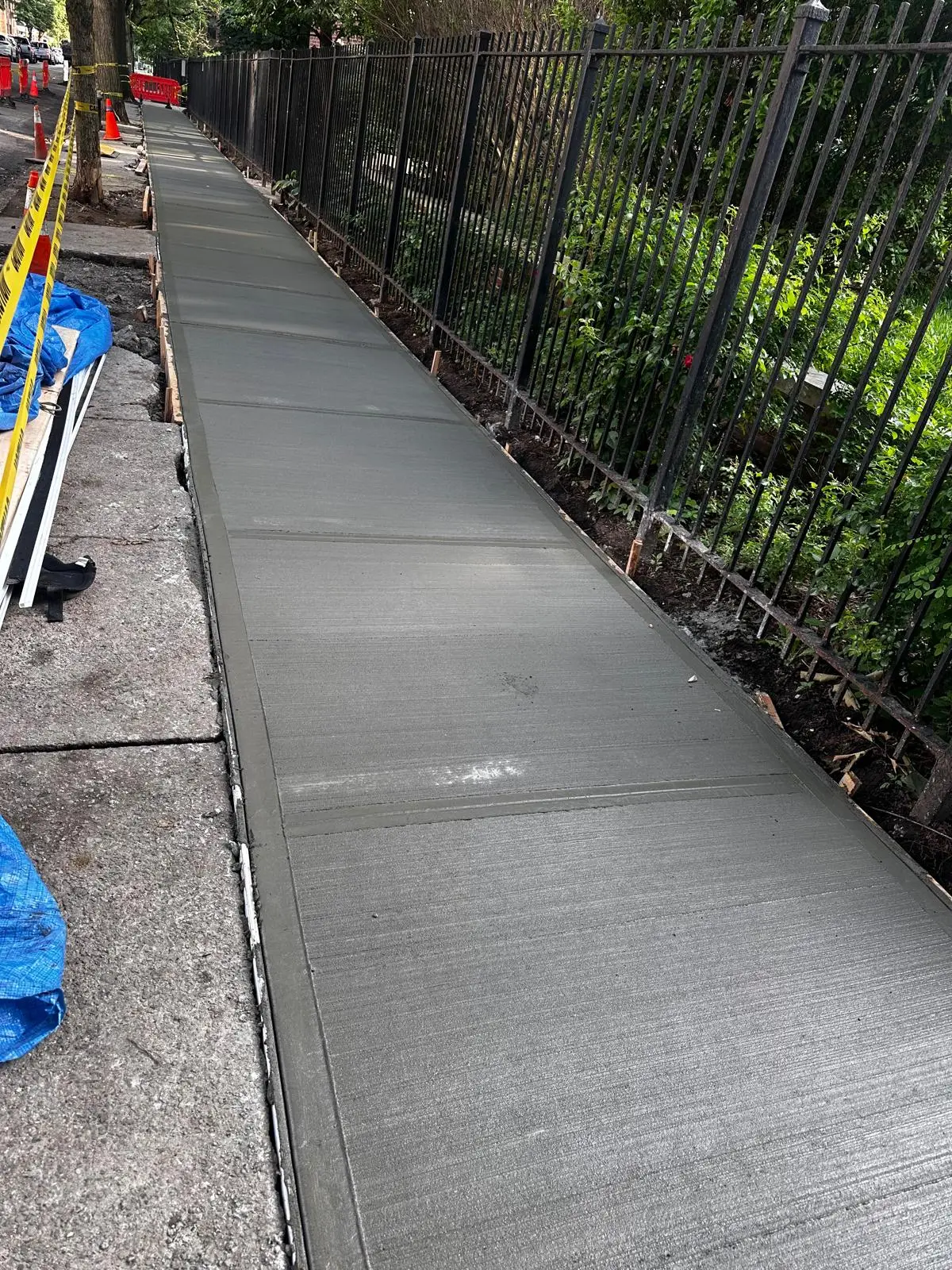
For people using wheelchairs, walkers, or canes, the sidewalk is the route. The 2010 ADA Standards set a minimum clear width of 36 inches for an accessible route and a maximum cross slope of 1:48, about 2 percent. A lifted flag, a broken edge, or a missing section interrupts that route even when the rest of the block is fine.
NYC applies its own sidewalk slope rules on top of federal guidance. Our NYC DOT sidewalk repair standards guide explains how the two fit together.
In NYC, anyone constructing, reconstructing, or repairing a corner must install pedestrian ramps to DOT's Standard Detail Drawing H-1011. That can mean rebuilding an existing ramp that no longer meets the current standard, so corner properties should confirm ramp scope before work is priced. Our commercial sidewalk repair team builds corner work to that detail.
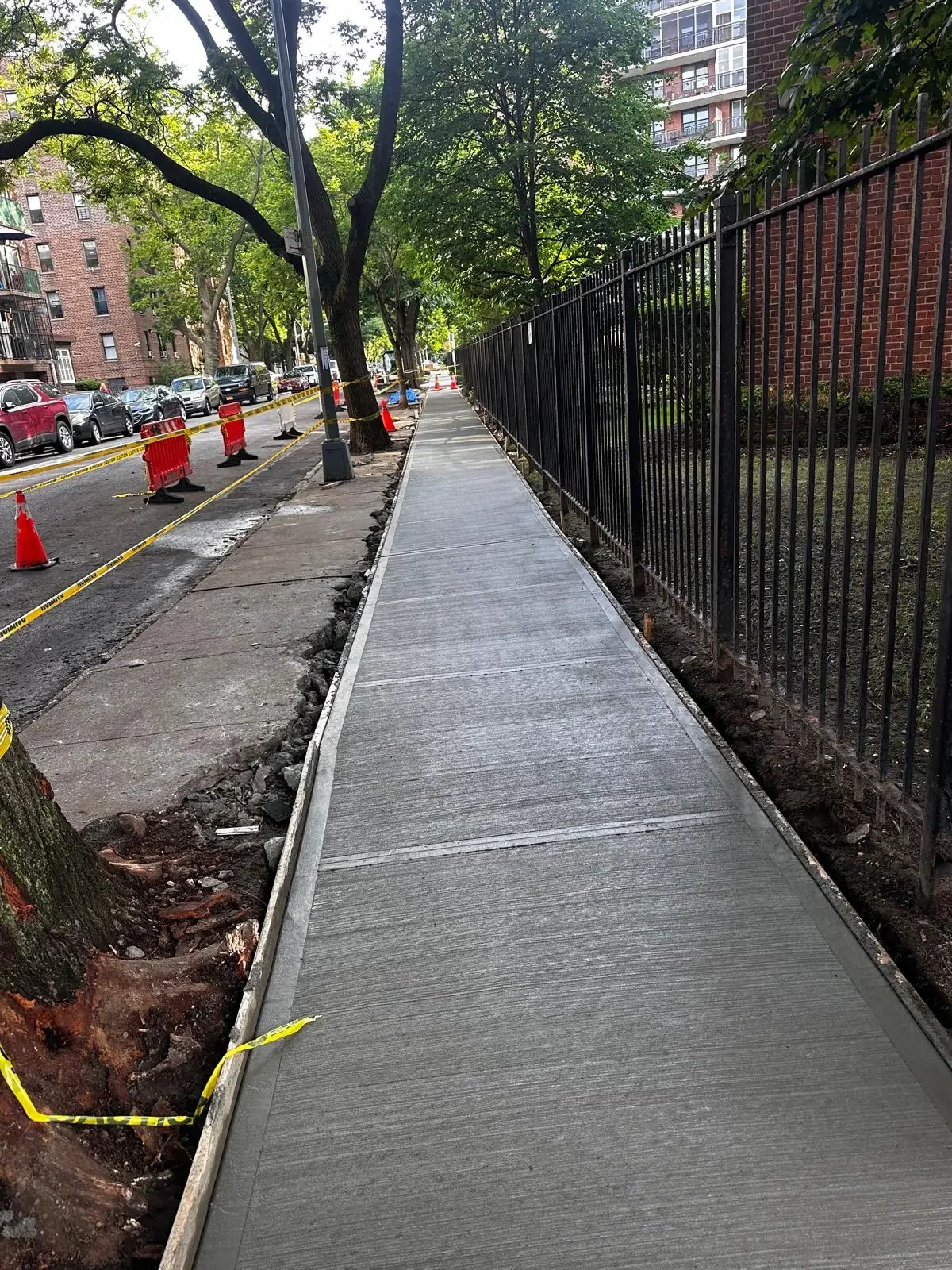
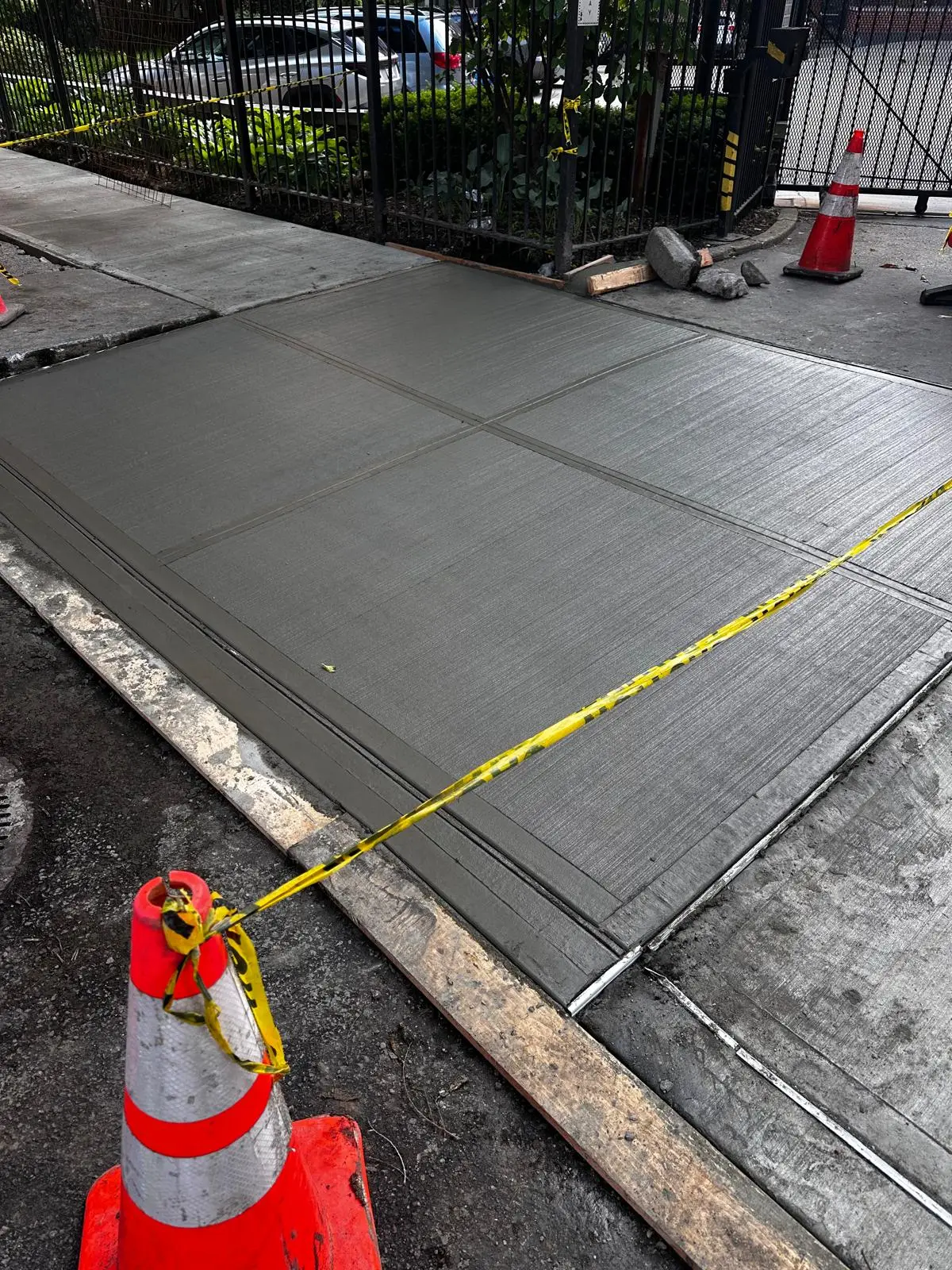
A storefront is only as easy to reach as the sidewalk in front of it. Level, unbroken concrete makes it simple for customers with strollers, carts, or mobility aids to walk in, while a damaged frontage turns a short visit into an obstacle course.
When sidewalks are safe, people use them: children walk to school, older neighbors run errands on foot, and parents push strollers without stepping into the street. Each well-kept frontage adds to a block that works for everyone, and each broken one creates a gap in it.
NYC sidewalks are built to pitch toward the curb so rain drains into the gutter. When flags lift or settle, water pools on the surface or runs back toward the building, and in winter that standing water refreezes into ice. Keeping flags level keeps the drainage working as designed.
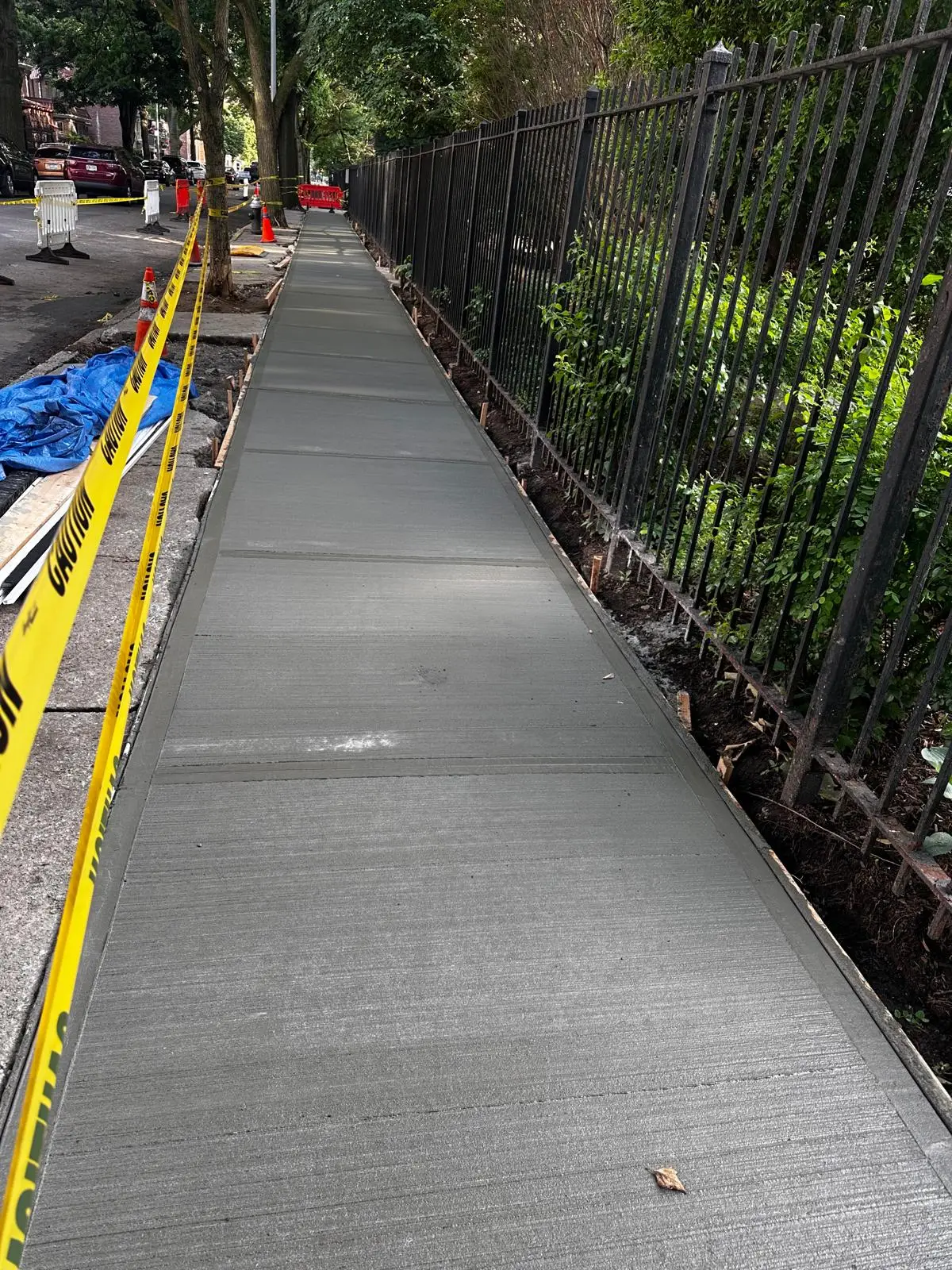
Water gets into cracks, freezes, expands by about 9 percent, and forces the crack wider every winter. Street tree roots keep pushing from below. A defect that is minor this year can reach the violation threshold in a season or two, and once it does, DOT rules require replacing the flag, because patchwork counts as a defect in its own right. For tree root damage in particular, catching the problem early leaves time for the Parks permit a repair near a City tree requires.
| Scenario | Your Cost |
|---|---|
| Standard single slab replacement (Eden) | $800 flat |
| Larger sidewalk repairs (Eden) | $8 to $25 per sq ft |
| DOT Sidewalk Construction Permit | $70 for every 300 linear feet |
| City-performed repair after a missed deadline | City's cost plus administrative expenses up to 20% |
| Unpaid City repair bill | Lien ahead of all but taxes; interest after 90 days |
Our sidewalk repair cost guide explains what moves a job within those ranges, and our sidewalk repair process shows how a repair runs from inspection to DOT sign-off.
Under Administrative Code 19-152 you are responsible for repairing the sidewalk abutting your property, whatever caused the damage, including a City tree. That duty applies to every property type, from single-family homes to commercial buildings.
Liability for injuries is a separate question governed by Section 7-210, which exempts one, two and three family homes that are owner-occupied and used exclusively for residential purposes. If your property falls outside that carve-out, a defective flag is a live exposure, and the condition is yours to fix either way. Damages are decided case by case, so take legal advice on your specific situation rather than relying on a standard figure.
Addressing violations promptly through a licensed violation removal contractor is the clearest way to protect both the property and your finances.
Eden Contractors NY handles inspections, permits, repairs, DOT sign-off, and lien removal across the Bronx, Brooklyn, Manhattan, and Queens.
Get a Free Estimate TodayNo study isolates the resale value of a sidewalk repair. The research often quoted, including the CEOs for Cities walkability study, measures access to nearby destinations rather than sidewalk condition. The clear financial benefit is avoiding violations and liens that complicate a sale or refinance.
The property owner. Administrative Code Section 19-152 makes owners responsible for repairing the sidewalk abutting their property, whatever caused the damage, including a City tree.
Usually the owner, under Section 7-210. One, two and three family homes that are owner-occupied and used exclusively for residential purposes are exempt, so the answer depends on your property. Take legal advice on your specific situation.
Substantial defects include a vertical difference of 1/2 inch or more between adjacent flags, missing flags, flags cracked so badly that pieces can loosen, and undermined flags with voids beneath.
75 days after the violation is served, or 10 days if DOT sets a shorter period for a hazard. After that, the City may perform the repair and bill you.
You are billed for the City's cost plus administrative expenses of up to 20 percent. The debt becomes a lien ahead of all other liens except taxes, and interest is added if it goes unpaid for 90 days.
A lien can. It appears in the title search and has to be cleared before closing. Dismissing the violation and clearing the lien are separate steps, and the lien is cleared at the County Clerk's Office.
Eden prices a standard single slab replacement at $800 and larger repairs at $8 to $25 per square foot. The DOT permit is $70 for every 300 linear feet.
At least 36 inches under the 2010 ADA Standards, with a maximum cross slope of about 2 percent. In NYC, repairing a corner also requires pedestrian ramps built to DOT Standard Detail Drawing H-1011.