
Sidewalks in NYC are legally mandated pedestrian pathways, usually concrete, running between the street curb and the property line. They are more than a walking surface. They are a component of public safety, urban mobility, accessibility, and economic life, and in New York City they are the legal responsibility of the property owner next to them.
If you own property here, understanding your obligations around residential sidewalk repair and commercial sidewalk repair matters legally and financially. This guide covers who is responsible, what triggers a violation, how the deadline works, what repairs cost, and what happens if you do nothing.
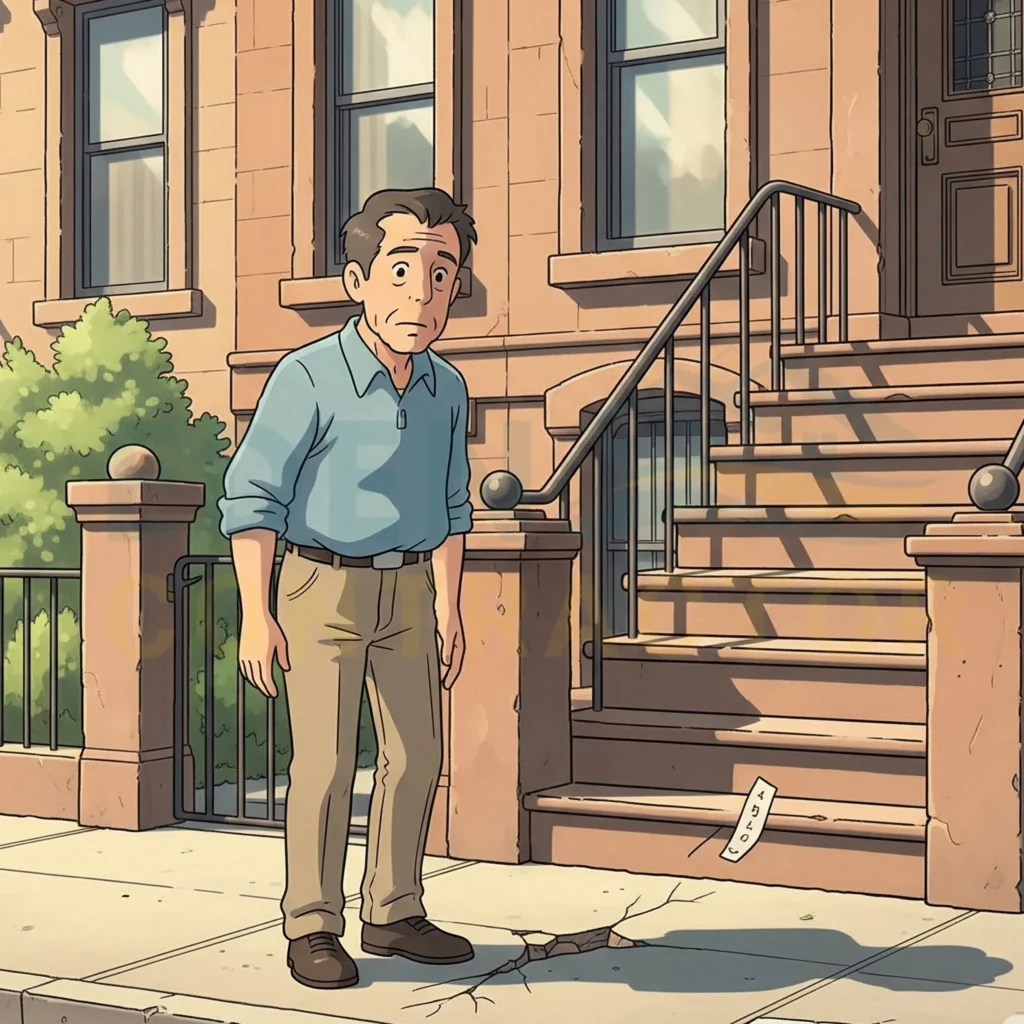
Under Section 19-152 of the NYC Administrative Code, property owners are legally responsible for the sidewalk abutting their property, whether residential, mixed-use, or commercial. That covers maintenance, repair, replacement, and new installation, whatever caused the damage.
The property owner, in nearly every case. The single narrow exception is the NYC Parks Trees and Sidewalks Program, covered in section 11 below, and it applies to a small set of properties under tightly defined conditions.
Not directly. A Notice of Violation carries no fine. It carries a deadline. What costs money is missing that deadline, because the City can then perform the repair itself and bill you for its cost plus administrative expenses of up to 20 percent under 19-152. See sidewalk violation removal.
An unrepaired defect leads to a DOT violation notice. If the deadline passes, the City may do the work and charge you for it plus administrative expenses of up to 20 percent. Once that charge is entered it becomes a lien on the property ahead of every other lien except taxes, and interest is added if it goes unpaid for 90 days. A lien has to be cleared before a sale or refinance can close. See what a sidewalk lien is and sidewalk lien removal.
Pedestrians injured by a defective sidewalk may sue the owner. You can also be cited for failing to clear snow and ice. The clock is four hours after the snow stops falling, with the hours between 9pm and 7am excluded from the count.
These are the conditions a DOT inspector cites. Any one of them can trigger a DOT sidewalk violation and the 75 day deadline that comes with it.
For how these are measured on site, see our NYC DOT sidewalk repair standards guide.
Several factors cause sidewalks to crack, shift, or deteriorate. Understanding them helps you stay ahead of repairs and avoid a violation.

Roots from mature street trees, particularly London plane and Norway maple, are the most common cause of sidewalk damage in NYC. As roots thicken in search of moisture they lift and fracture the slab above, producing the raised edges that trigger most violations.
If your sidewalk has been lifted by City tree roots, our tree roots damage sidewalk repair service handles root pruning, barrier installation, and slab replacement in compliance with DOT and Parks requirements.
Vibration from heavy machinery during roadwork, utility installation, or building development loosens the soil beneath the slab and causes uneven settlement. Sidewalks next to active construction zones are among the most likely to develop defects, which is why documenting the work nearby matters if you later need to establish who caused the damage.
Water seeps into hairline cracks, freezes overnight, and expands by roughly 9 percent in volume, forcing the crack wider with every cycle. Across a single NYC winter that repeats enough times to turn a surface crack into a structural failure. De-icing salt compounds it by accelerating surface spalling.

Sidewalks near transit stops, schools, and commercial corridors carry far heavier footfall than residential side streets. Sustained traffic contributes to abrasion, micro-cracking, and surface scaling, especially in combination with de-icing salts and standing moisture, so dense frontages need attention sooner.
NYC sidewalks are built to pitch toward the curb so water drains into the gutter. When flags lift or settle, water pools on the surface or runs back toward the building, weakening the concrete and eroding the sub-base soil beneath it. Drainage problems are especially common on commercial properties with larger surface areas.
Insufficient base depth, the wrong water to cement ratio, or inadequate slope will show up as cracking, ponding, or uneven settling within a few years, well short of the 20 to 30 year service life properly installed concrete should reach. This is the reason a bid priced well below market is rarely a saving.

If you notice any of the defects listed above, report it through NYC 311 or the NYC DOT website. Include the exact street address. You can report defects next to residential and commercial properties, City-owned properties, areas under bridges, and traffic medians or pedestrian islands.
NYC maintains the sidewalks next to public housing, parks, hospitals, schools, libraries, and homeless shelters. Report damage via the NYC 311 online form. DOT confirms ownership, inspects, and notifies the relevant agency.
For multi-unit buildings and commercial properties, file the same way through 311 or the DOT website. If a defect is found, the owner receives a Notice of Violation with a repair deadline, usually 75 days.
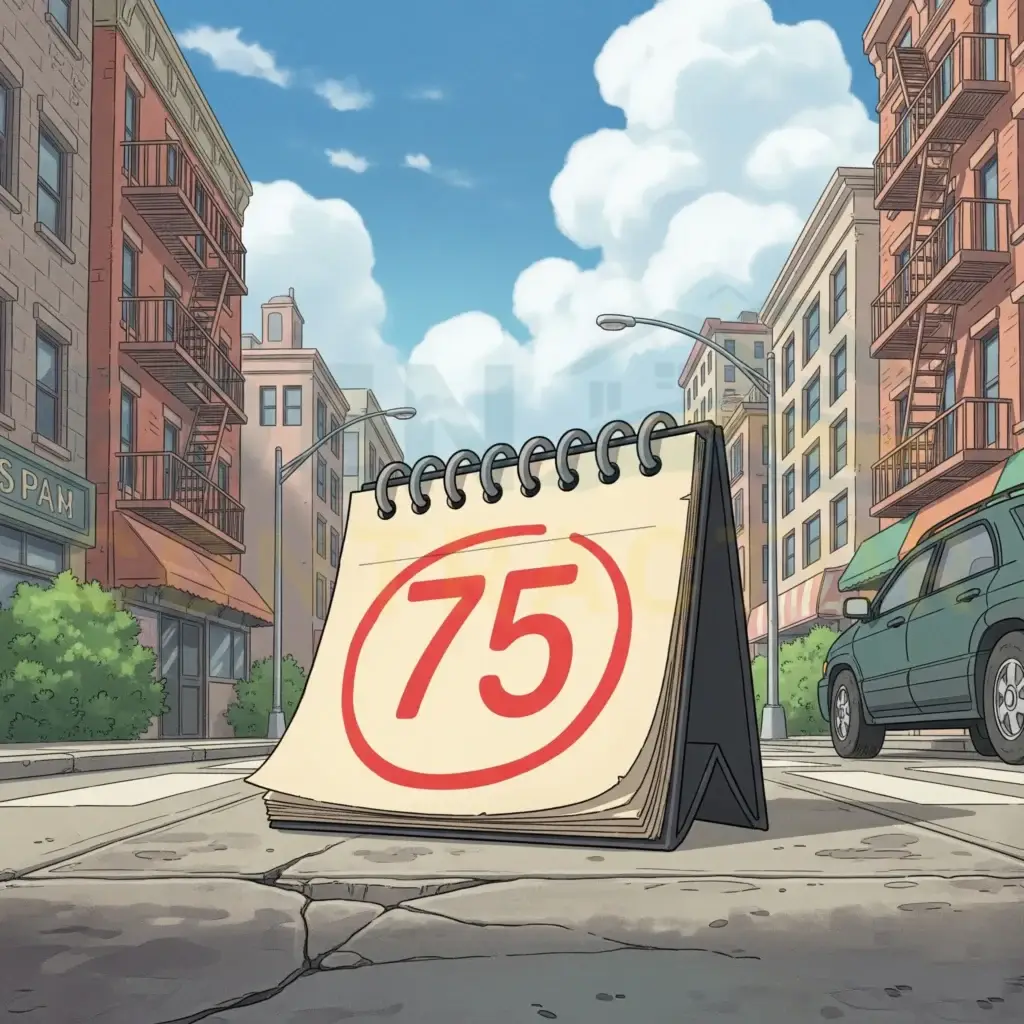
Inspections follow 311 complaints, routine DOT surveys, or nearby construction activity. The inspector evaluates each sidewalk panel, called a flag, against the defect criteria in section 3.
If defects are found the inspector issues a Notice of Violation, mailed to the owner and filed with the County Clerk as part of the property record. It contains a description of each defect, photographs taken during the inspection, a diagram showing exactly which flags are cited, and the repair deadline.
Read the diagram carefully. You are obligated to repair the flags it identifies, not your entire frontage. A contractor quoting the whole run when the diagram cites three flags is quoting beyond scope.
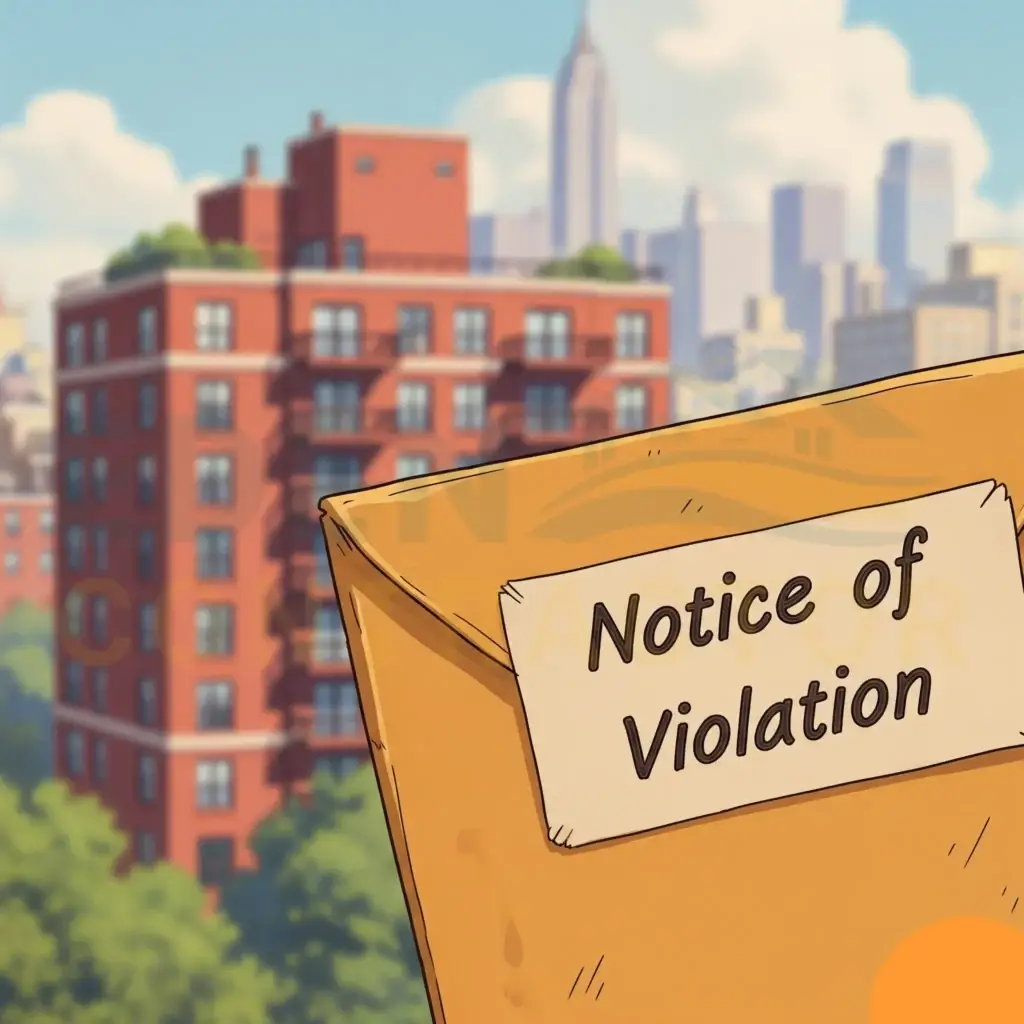
You have 75 days for standard violations and as little as 10 days for hazardous conditions. Miss the deadline and the City may hire its own contractor, bill you through the Department of Finance, and enter a lien against the property.
Only contractors licensed by NYC DOT and the Department of Consumer and Worker Protection may perform sidewalk repairs. For work over $200 they must also hold a valid Home Improvement Contractor License.
Verify license status by calling 311 or using the Business Background Check page. Eden Contractors NY is licensed, insured, and handles DOT violation removal across the Bronx, Brooklyn, Manhattan, and Queens.
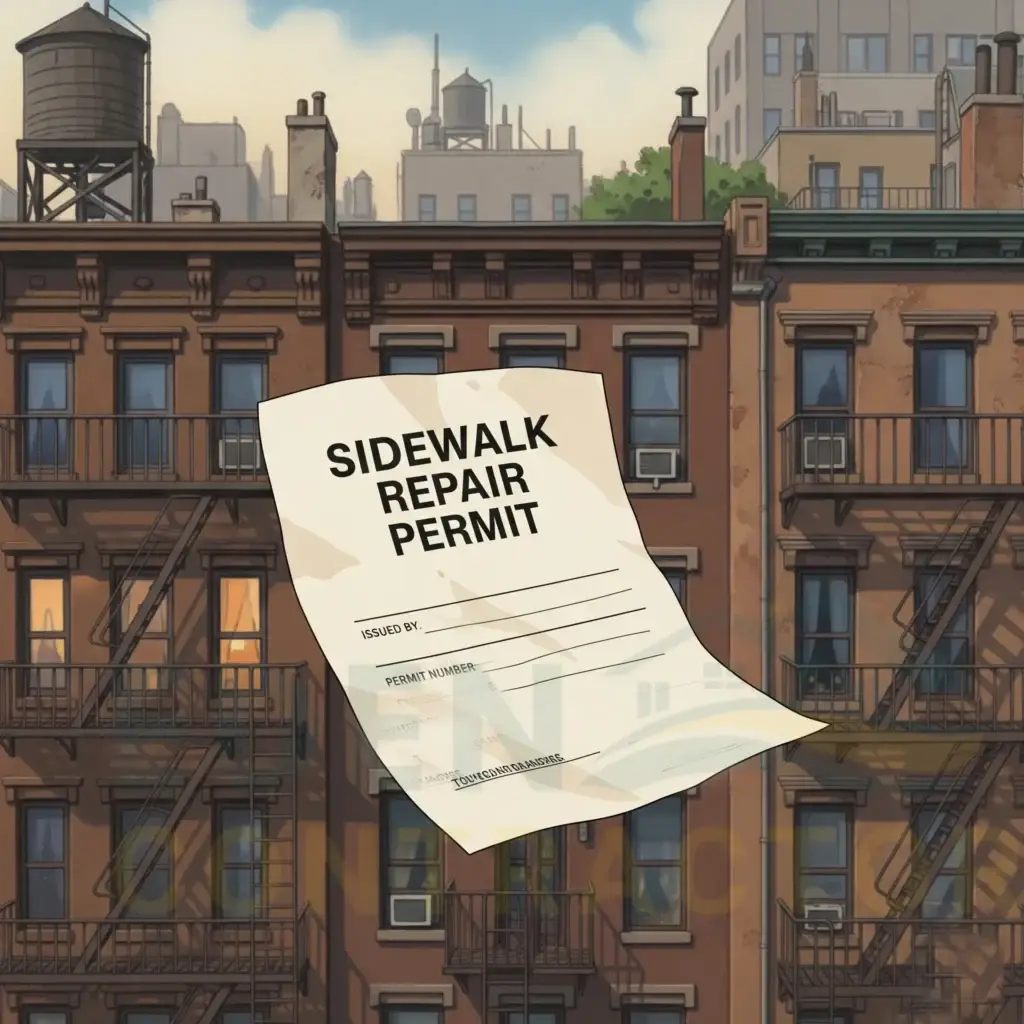
A permit is mandatory before any sidewalk construction or repair begins. Only licensed contractors can obtain one, and they file on your behalf.
The permit fee is $70 and covers up to 300 linear feet for one property. Corner properties needing work on both frontages require two permits. Submit by mail to:
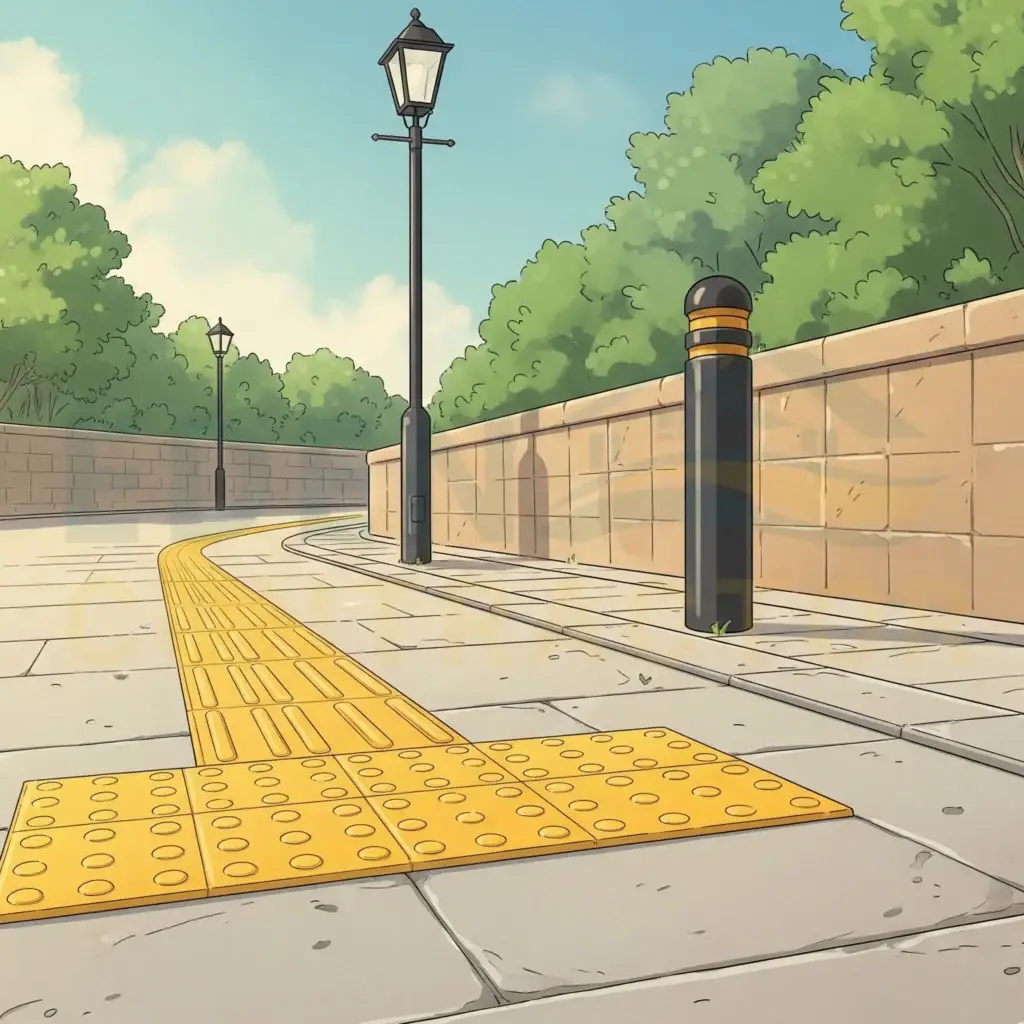
Address every flag noted in the violation diagram. Use 4,000 PSI concrete to meet DOT strength requirements. Add one inch sealed expansion joints at every property line, where the sidewalk meets the curb, and every 8 to 15 feet along the run.
If the work involves pedestrian ramps, install detectable warning surfaces. For tree root damage, root pruning or barrier installation may also be required, along with a Tree Work Permit from NYC Parks.
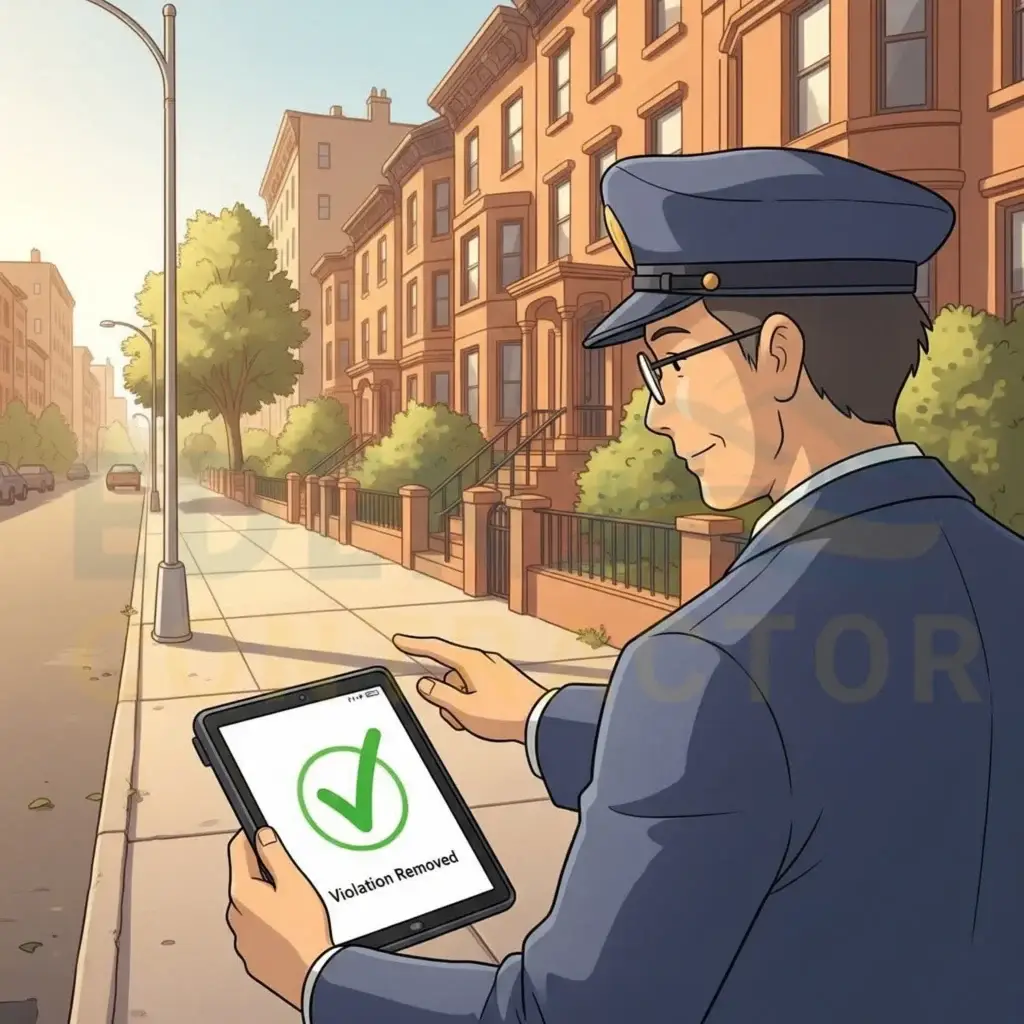
Call 311 to request a violation dismissal inspection. Have ready your permit number, the property address, the block and lot number, the violation notice number, and your contact details.
Clear the area of parked cars and materials before the inspector arrives. If the work meets DOT standards the violation is dismissed.
Eden Contractors NY handles the whole process, from inspection and permits through repair and DOT sign-off.
Get a Free Estimate Today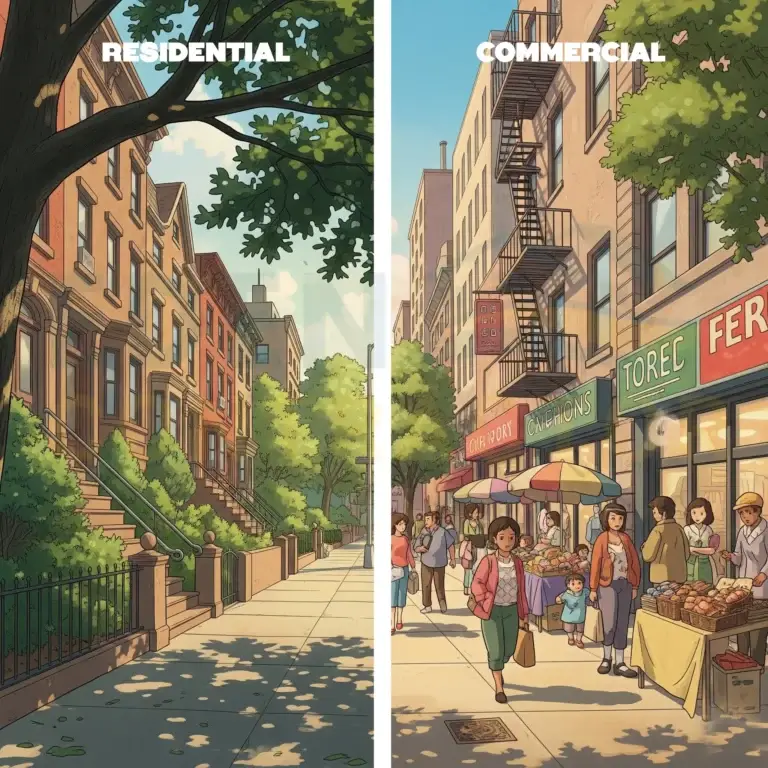
These are Eden Contractors NY rates. Every rate includes the free site inspection, DOT permit acquisition, the repair, and the DOT approval visit.
| Job type | Price | Typical total |
|---|---|---|
| Single slab or flag replacement | $800 flat | $800 |
| Sidewalk repair and DOT violation removal | $8 to $25 per sq ft | $1,000 to $3,000 residential |
| Commercial or mixed use frontage | $8 to $25 per sq ft | Around $7,000 |
| Concrete curb repair and replacement | $50 to $80 per linear ft | Varies by run length |
| DOT sidewalk construction permit | $70 per 300 linear ft | Included in Eden quotes |
The comparison that matters is not repair against zero. A repair completed inside the window is a known, fixed, negotiable cost. A City-performed repair arrives as a bill you cannot negotiate, at its cost plus administrative expenses of up to 20 percent, followed by a lien ahead of every other lien except taxes.
For what moves a job within those ranges, borough by borough, see the full sidewalk repair cost guide.
If the cited damage is not on your property, or the report does not match what is actually there, you can appeal. Match the Preliminary Inspection Report against your frontage first, checking width, dimensions, trees, cellar doors, and utility caps.
You have 75 days from the violation date to file an appeal with the NYC Department of Transportation.
Complete the sidewalk violation appeal form with photos of the sidewalk, previous repair history, and any supporting documentation.
DOT assigns a second inspector, who does not have access to the original report, and reinspects within 180 days.
The outcome of the second inspection is final and arrives by certified mail.
Violations are issued against the property record. If a sale was not reflected in the City's records, the notice goes to the previous owner. The defect still has to be repaired, so resolving the record and addressing the sidewalk run in parallel rather than in sequence.
Mail a written request with proof of the ownership change, such as a sale deed or updated tax record, to:
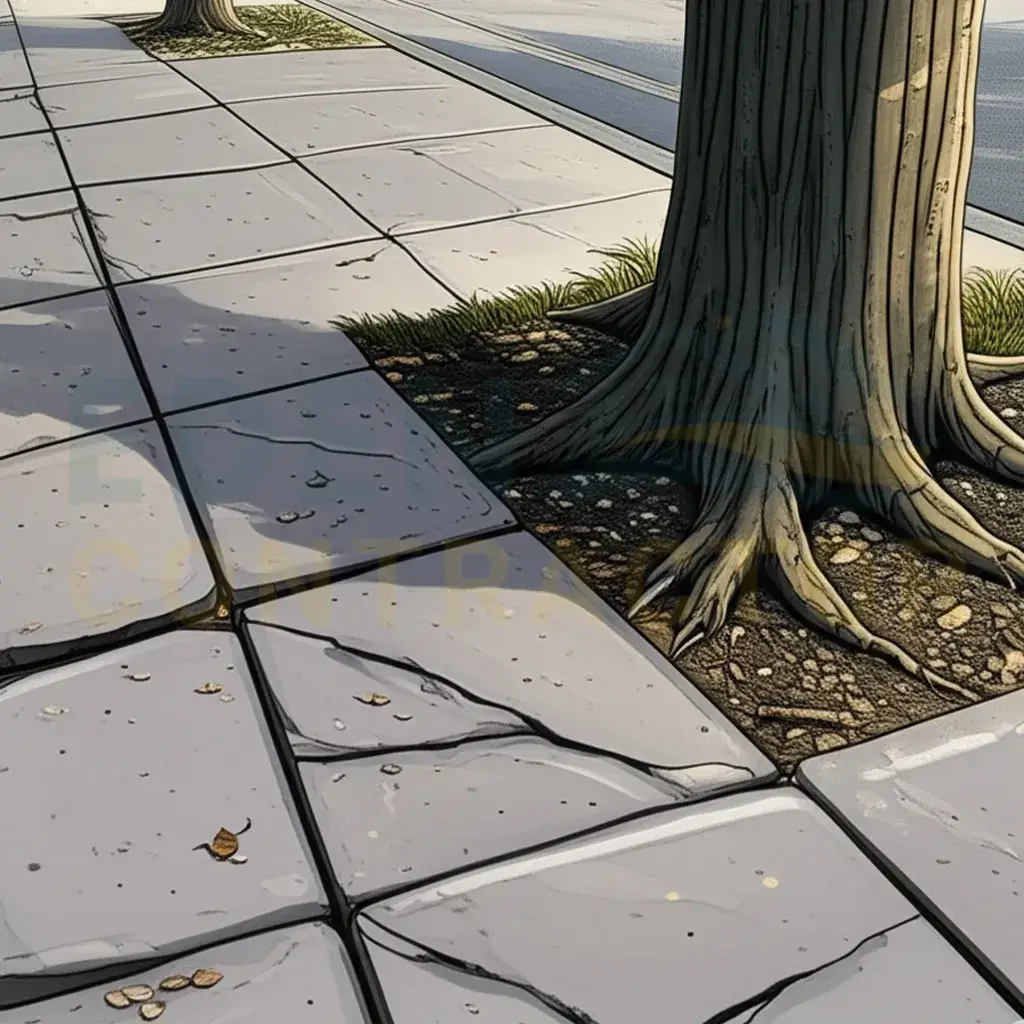
NYC Parks repairs severe tree root damage at no cost, but eligibility is narrow and all of the following must be true:
Condos, co-ops, buildings with four or more units, commercial property, mixed-use buildings with a storefront, and any one to three family home the owner does not live in are all excluded. Apply through the Trees and Sidewalk Repair Program.
The program runs on a limited annual budget and a severity-based priority score rather than a queue, so the wait can run into years. Owners facing a pending sale, a refinance, or active injury exposure usually do better hiring privately now and claiming reimbursement after. See our tree roots damage sidewalk repair service.
If you paid out of pocket to fix damage caused by City tree roots, you may qualify for reimbursement through the NYC Comptroller's Office. You have 90 days from repair completion to submit the claim. Missing that window ends the claim regardless of the merits.
Incomplete paperwork is the most common reason these claims fail, so collect the permits before the work starts rather than after.
You are responsible for your own repairs, at your own cost, if you own any of the following:
For commercial sidewalk repair, our team handles larger surface areas, heavy foot traffic, and off hours scheduling across Manhattan, Brooklyn, Queens, and the Bronx.
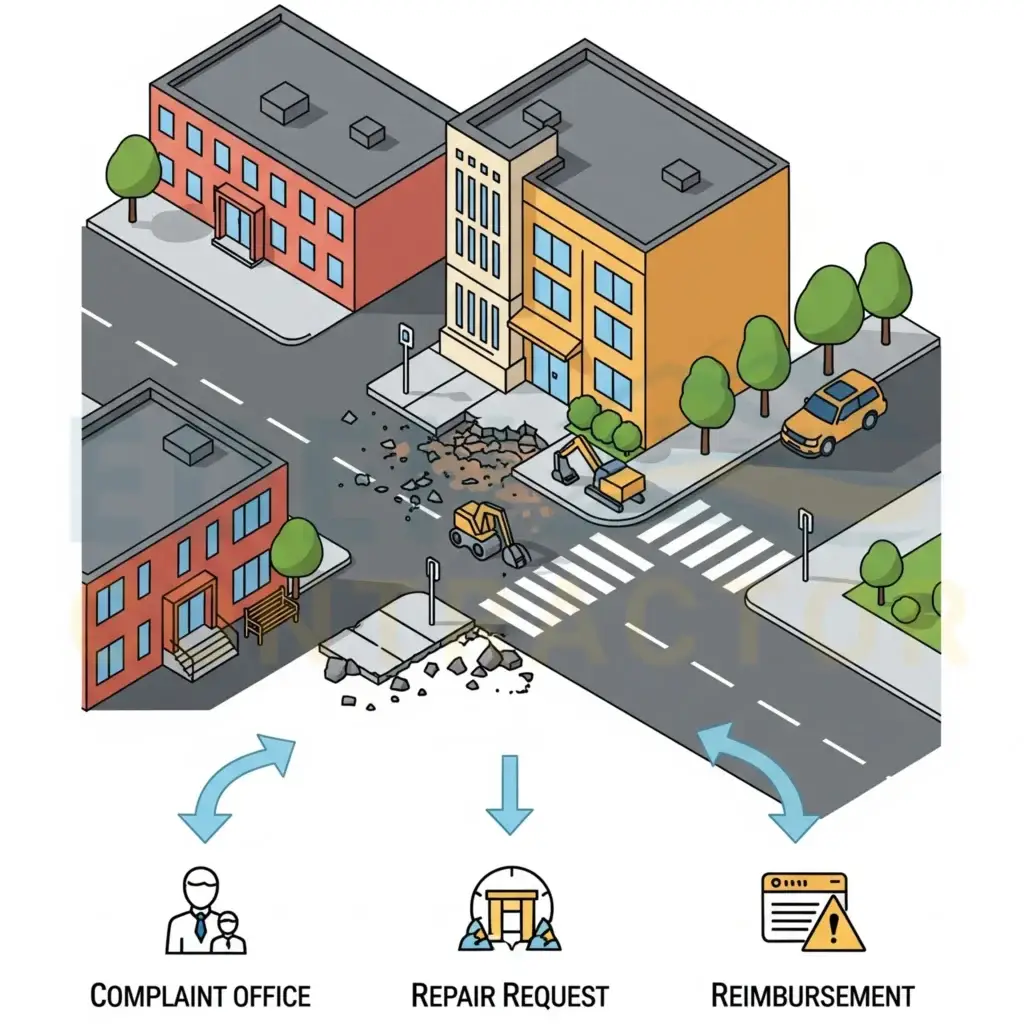
Any contractor or utility company working near a sidewalk is required to restore damage caused during their project as a condition of their City permit. If they do not, you can file a complaint and request repairs or reimbursement. The repair obligation still sits with you in the meantime, so do not let the dispute run past your deadline.
Take clear, dated photos and note when you first saw the damage. Keep emails, notices, and permits relating to nearby construction. Evidence gathered at the time is worth far more than a recollection later.
If you know who caused the damage, ask them to handle the repair. If they refuse, file a formal claim with their claims or legal department. Most utility companies have an established process for this.
If you are not sure who caused it, call 311 and ask about active street or sidewalk construction permits at your location. If that does not resolve it, request a formal permit search, for which a small fee may apply:
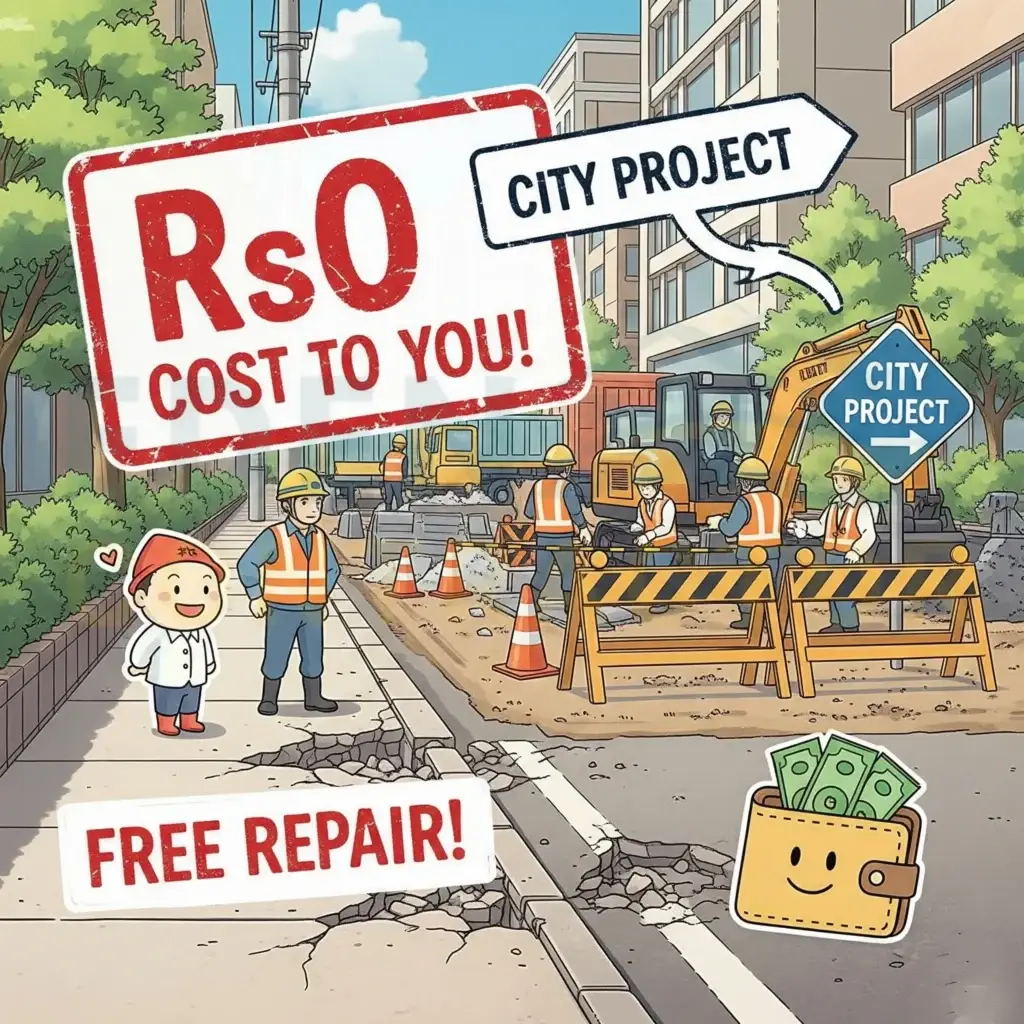
If a City contractor working on a public project such as water mains or street reconstruction causes damage through negligence, they are required to repair it at no cost to you. Report it by calling 311 and asking for Department of Design and Construction services, or contact your local DDC borough office. To file a damage claim against the City you must do so within 90 days of the incident.
The property owner. Administrative Code Section 19-152 makes owners responsible for repairing the sidewalk abutting their property, whatever caused the damage, including a City-owned tree.
75 days from the date the violation is served, or as little as 10 days where DOT sets a shorter period for a hazardous condition.
No. The Notice of Violation carries a deadline rather than a fine. The cost arrives if you miss it, when the City performs the repair and bills you for its cost plus administrative expenses of up to 20 percent.
No. Dismissing the violation and clearing the lien are separate steps. If the City already performed the work and entered a charge, the lien stays on the property record and is cleared at the County Clerk's Office.
Only under narrow conditions. The property must be Tax Class 1, owner-occupied, not used for commercial purposes, and the damage must be caused solely by City-owned tree roots. A home the owner rents out, or one with a storefront, is not exempt.
A standard single slab replacement is $800 flat. Larger DOT compliant repairs run $8 to $25 per square foot, which puts most residential jobs between $1,000 and $3,000 and commercial projects around $7,000. Curb work is $50 to $80 per linear foot.
$70, covering up to 300 linear feet for one property. Corner properties needing work on both frontages require two permits. Only a licensed contractor can pull one, and they file on your behalf.
No. Permits are issued only to contractors licensed by NYC DOT, and for work over $200 a Home Improvement Contractor License from DCWP is also required. Unpermitted work does not clear a violation and can fail reinspection.
Yes, within 75 days of the violation date. A different inspector reinspects within 180 days without access to the original report, and the second decision is final.
Within four hours after the snow stops falling, with the hours between 9pm and 7am excluded from the count.