
When the owner of a residential property at 53 W 71st Street noticed that a street tree's roots had pushed several sidewalk flags out of alignment, the problem had already gone past appearance. The raised concrete was a trip hazard and part of an open NYC DOT sidewalk violation. The owner found us on Google while looking for a Manhattan contractor who handles both tree root sidewalk damage and DOT violation removal.
Because the damage involved a City street tree and the property sits in a historic district, several approvals had to be in place before any concrete came out. We handled the whole job: permits, tree protection, concrete replacement, the dismissal inspection, and final DOT sign-off.
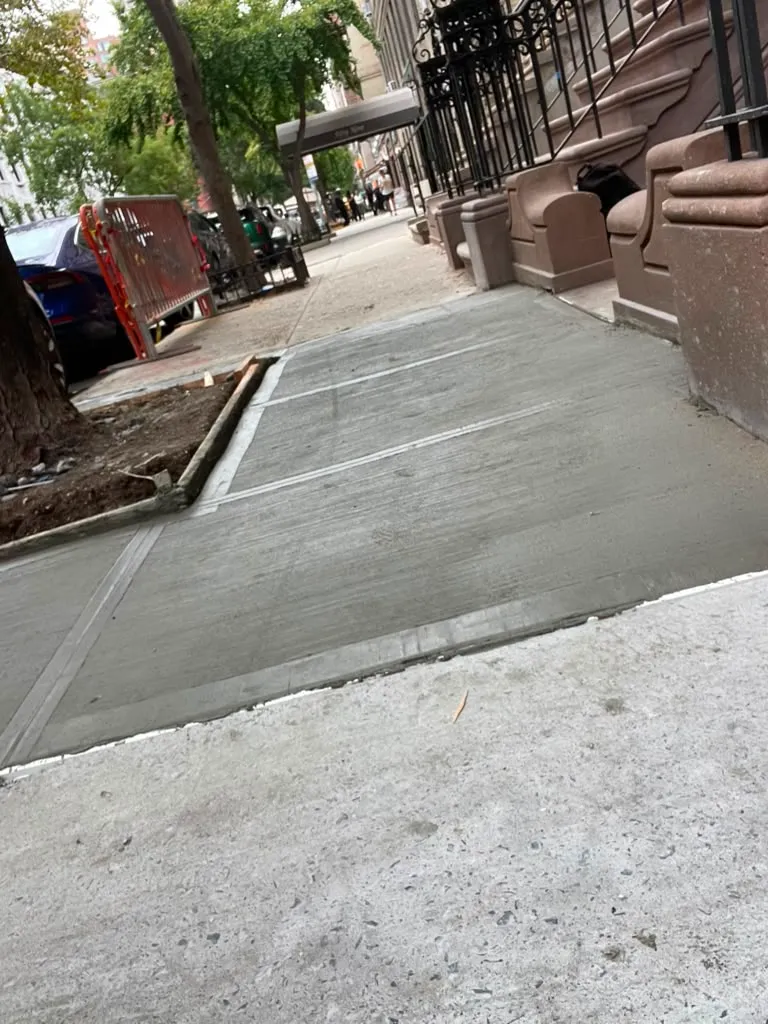
Project Overview
| Project detail | Information |
|---|---|
| Client | Residential property owner |
| Location | 53 W 71st Street, New York, NY 10023 |
| Neighborhood | Upper West Side, Manhattan |
| Area repaired | Approximately 125 sq ft |
| Slabs replaced | 5 full flags |
| Cause of damage | Street tree roots growing beneath the sidewalk |
| Concrete | Reinforced 4,000 PSI concrete |
| Project cost | Approximately $4,900, permits included |
| Timeline | Up to 60 days, including approvals, construction, inspection, and violation sign-off |
The Real Problem Was Under the Concrete
At first glance this looked like five uneven slabs. The cause was underneath: the tree's roots had spread beneath the sidewalk and gradually forced sections of concrete upward until the height difference became a hazard.
Pulling the old slabs and pouring new ones at the same spot would not have solved anything. With the roots unaddressed, the new concrete would start lifting again. The repair had to deal with the conditions under the sidewalk as well as the surface.
Why the City program did not cover this: NYC Parks repairs some tree root damage for free, but only for owner-occupied one to three family homes that meet strict criteria, and DOT does not issue tree root violations to eligible homes. This property had an open violation, so the repair was the owner's to make. Our guide on who qualifies for free tree root sidewalk repair explains the rules.
Four Approvals Before Any Demolition
The job combined sidewalk reconstruction, work near a City tree, and a historic district, so it needed four separate approvals:
- NYC DOT sidewalk construction permit for the repair itself
- Sidewalk closing permit for the work zone
- NYC Parks Tree Work Permit, required for sidewalk work within 50 feet of a City tree
- Landmarks Preservation Commission approval, required for sidewalk work in a historic district
Starting construction before these are in place is one of the most common reasons a violation repair stalls or fails re-inspection. Lining them up first meant the physical work could run straight through.
How We Rebuilt the Sidewalk
Protecting the tree
Street trees are part of the City's streetscape, and their roots cannot be treated like demolition debris. The City no longer permits root slicing or root pruning of City trees, so the repair had to work around the roots. All work near the tree followed the conditions of the Parks Tree Work Permit, and we installed a root barrier to guide future growth away from the new sidewalk. The goal was a level, safe walking surface without harming a mature tree.
Getting the grade right
When roots lift one flag, the flags around it often end up at the wrong height too. After removing the damaged concrete, we checked the elevations along the frontage, corrected and compacted the base, and set the finished grade so the new flags meet the existing sidewalk without a raised edge or dip. A leftover lip at a joint is still a trip hazard, and it can fail the dismissal inspection.
New reinforced concrete
The five replacement flags were poured in reinforced 4,000 PSI concrete and finished to match the surrounding sidewalk, giving the frontage a durable surface built for daily foot traffic and Manhattan winters.
Step-by-Step Repair Process
Inspected the frontage
Identified the five affected flags, the extent of root involvement, and the surrounding elevations.
Mapped the approvals
Confirmed the job needed DOT, sidewalk closing, Parks, and LPC approvals.
Secured permits before demolition
Had every approval in hand before any concrete came out.
Set up the work zone
Organized a safe work area with pedestrian access around the property.
Removed the damaged flags
Demolished about 125 sq ft of lifted concrete to expose the base and roots.
Worked around the roots
Followed the Parks Tree Work Permit conditions to protect the tree.
Installed a root barrier
Guided future root growth away from the new sidewalk.
Rebuilt and leveled the base
Compacted the base and set the grade to match the existing sidewalk.
Poured new concrete
Placed reinforced 4,000 PSI concrete in five full flags.
Finished and cleaned up
Finished the surface to match the frontage and cleared the site.
Requested the dismissal inspection
Filed with DOT once the repair was ready for review.
Followed through to sign-off
Stayed with the violation until DOT signed off, within about 60 days of starting.
A Repaired Sidewalk Is Not a Closed Violation
One of the most common misunderstandings about NYC sidewalk violations is that the violation disappears once the sidewalk is fixed. It does not. DOT has to inspect the work and confirm the defects were corrected before the violation is dismissed.
We filed the dismissal inspection request and kept coordinating until the repair received final DOT sign-off. The owner was not left with a new sidewalk and a violation still open in city records.
A mature street tree that had to be protected, four separate approvals including Landmarks, and a grade that had to be rebuilt rather than copied, all carried through to DOT sign-off.
The Result
Five lifted flags, about 125 sq ft, were replaced with new reinforced concrete on a rebuilt base, set at the right grade and protected by a root barrier. The project cost approximately $4,900 including permits and moved from approvals to DOT sign-off within about 60 days. The owner worked with one team for the permits, the tree requirements, the construction, and the city inspection.
For neighbors, the change is just as real. West 71st Street is a busy residential block, and an even sidewalk matters most to older residents, people using mobility devices, and parents with strollers.
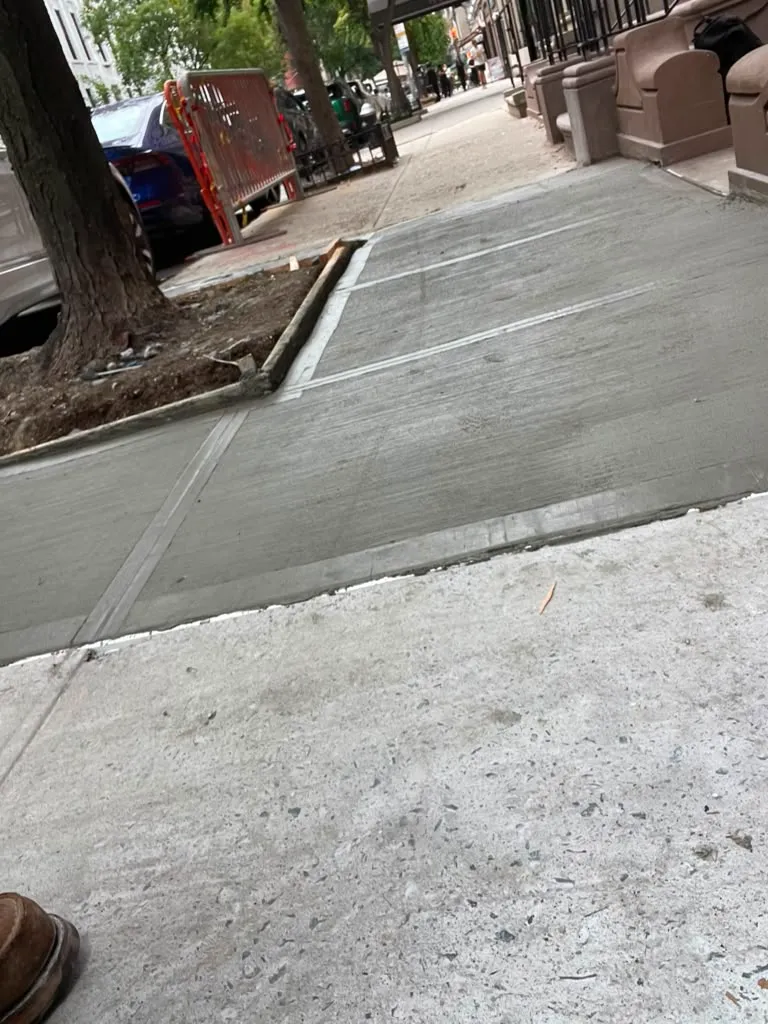
“I came across the company on Google while searching for a contractor familiar with both NYC sidewalk violations and tree root damage. They explained what permits would be needed and took care of the process from the initial tree work through the concrete replacement and inspection. Having one team manage the entire job made the process much easier, and the finished sidewalk looked great.”
Property owner, 53 W 71st Street, Manhattan